

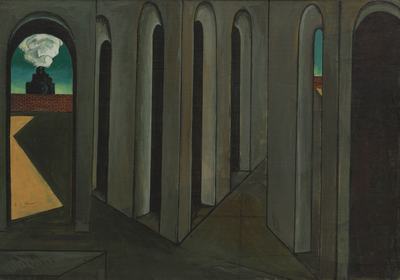
The city had not been safe for some time. Streets that used to bustle with foot traffic and window shoppers had become gloomy pathways of uncertainty. After sunset, no one stepped out in front of his door. Occasionally a dog trotted by, barked at a shadow and vanished into the darkness. Cats had disappeared altogether since HE had begun making HIS rounds. People claimed they’d hear shrill, feline cries and assumed HE was nabbing them. A brief hissing followed, then silence. Those nearest the scene of the struggle never ventured a glance out the window. Too great was their fear. They waited the customary quarter hour (the time prescribed by the Emergency Committee); only then in a darkened room did they approach the window, carefully draw back a corner of the curtain and peer out onto the street. No one ever sighted anything out of the ordinary, not even in the light of the full moon; silence reigned. Mornings, people unlocked their doors, stood at their doorways and scrutinized the cobblestone. But there were never any signs of a struggle: no cat hairs, no blood, no evidence of any kind. On the contrary: the streets were spotless as if a company of street cleaners had been busily working through the night.
Some people were comparing HIM to the wind because HE swept through the city invisibly. No one ever caught HIM in the act, or knew what HE looked like, though almost everyone was certain they had heard a rustling marking HIS comings and goings.
Months ago (had it been so long?) the streetlights had begun flickering for days before they went out for good. And soon after, the thieves abandoned their nocturnal prowling. They too had grown afraid. In the course of a single night, several members of their fraternity had vanished without a trace—at least that was what sources close to the scene reported. From then on, anyone and everyone intimate with the night lost courage, including the police. They too suspended their nightly patrols for fear of HIM.
By day, a somber mood hung over the city, even under sunny skies. People nodded to strangers and nameless neighbors perfunctorily if at all. They hushed past each other silently and hastily. Once renowned for its friendliness, the city grew increasingly gloomy. It became difficult to imagine that it had ever been any different. But people were afraid. Nevertheless, they attended to their business as best they could. Conversation, even among friends, was kept to a minimum—at least in public. Public displays of affection were now deemed suspicious. Small wonder. No one could make sense of the situation. Most people feared the consequences of a careless word. “Take no chances,” was considered the most sensible advice.
Restaurant owners were especially hard hit. Granted, no restaurateurs or for that matter any guests had ever vanished, but business soured rapidly, which should have surprised no one, and soon the restaurant owners were closing shop at dusk. Because no innkeepers (or their guests) had ever disappeared, some members of the Emergency Committee initially surmised that HE might come from their ranks. A theory began making the rounds that the source of the events of late might be something as banal as some ruthless competition among innkeepers. On the other hand, given the fact that all restaurateurs without exception had been equally hard hit, that suspicion proved untenable and soon no one, not even the Emergency Committee, took it seriously.
Nightlife had never been particularly flamboyant in the city. Still, it had an excellent theater, a few first-class restaurants and several bordellos whose reputation extended far beyond the borders of the province. With business in the “houses” all but languishing, one might have imagined the hookers had joined a chaste religious order, an idea that quickly precipitated rumors about the Church’s role (or that of some anonymous moral apostle) in the events—as if HIS real intent was to quash prostitution. The Emergency Committee remained skeptical. Eliminating one type of immorality (prostitution) and replacing it with another (abductions), they argued, was illogical if not downright absurd. Still, in the wake of an increasingly desperate situation, this theory continued to attract a few stubborn adherents. Moreover, the local bishop found himself in the unenviable position of having to refute those rumors. Naturally, the louder he protested, the less credible his protests seemed to his detractors. As more and more people, desperate for consolation and for some meaning to the current situation, crowded into the churches, critics saw their suspicions corroborated. The larger the congregations, the more the Church’s involvement seemed self-evident to them.
On the other hand, as everyone knew, HE first struck at the theater; more precisely, during the seventh scene of The Broken Jug. From one second to the next, spots and strip lights went out, leaving everything and everyone in the dark. Some people in the audience laughed, feigning understanding, as if the blackout had been intentional, a clever touch in the dramaturgy. But when the darkness would not end, even the most seasoned theatergoers quelled their chuckling. The mood turned bleak. You could sense the nervousness, the growing claustrophobia, the interrogatives in the air. Some lit matches, but these extinguished quickly, and soon, honest-to-goodness panic broke out. More matches, flickering lighters illuminated the darkness like votive candles or so many stars in a black night. A few people called for calm. In vain. Agitated murmuring rippled through the airwaves. When at last the massive chandelier that hung from the ceiling like a Damocles sword did go on as suddenly as it had gone off, there came the next surprise: The stage was empty. The actors had vanished without a trace. Naturally, some wags spread the word that the disappearance was merely a publicity stunt. For a while people were desperate to believe that. But such an explanation did not satisfy the actors’ bewildered families or their friends. No clever theories were able to bring them back.
After the actors, the cats were targeted. In a single night, every last one of them vanished—even the most protected and spoiled pussies that had never once set a tender paw on the pavement. What was the meaning of this? That was the most salient question. Some were comparing HIM to the pied piper. But that correlation was stifled quickly for fear HE might overhear it and decide to lure away the children next. But HE did not hunt down the children—or for that matter the dogs. No one dared conjecture whom or what HE would appropriate next. Word spread that HE could read thoughts.
It was suggested HE had an affinity to light. Perhaps because, when the streetlamps initially went out, no technicians could find any flaw in the system. “Whatever it is, it seems to eat light,” was their helpless response. They were being glib, but the theory made the rounds rapidly, and once the disappearances had begun, the immanent dangers of artificial lighting seemed apparent to just about everyone. For which reason, henceforth both publicly and privately from sundown to sunrise, all lighting was prohibited by the Emergency Committee. The restriction applied even to smokers (though they frequently skirted that regulation). For most people however, the proverbial ounce of prevention was embraced more than willingly. With no light to attract HIM, so the consensus, perhaps HE might vanish as mysteriously as HE had appeared. That seemed logical.
It hardly need be mentioned that once night fell, no one ventured out onto the streets anymore, all the more so after a number of inveterate nocturnal strollers joined the ranks of the missing. On nights when such disappearances occurred, some people in the immediate area claimed they had heard a struggle outdoors similar in sound to that of the cats when they had been snatched: a muffled cry, some shuffling, and then, terrifying silence. By the light of day, there was as usual no trace of a scuffle—no matter how fastidiously curious eyes combed the cobblestones for clues. Once word spread about the grave dangers of an evening (or late night) constitutional, even the most committed night owls stayed home.
And yet before long, adjusting to the new circumstances became second nature, and the precautions necessary to achieve personal safety were reduced to three rules:
Do not keep cats as pets,
Do not make light from dusk to dawn,
Avoid the streets after dark.
Three simple rules: child’s play to learn and comply with.
Thanks to the three rules, life in the city regained, you might say, a degree of normalcy, and a visitor, arriving by daylight (when else?), would never have suspected that a state of emergency was in effect. For the uninitiated, nothing seemed out of place. People went about their business in an orderly fashion, buying and selling, conversing, flirting or just drifting by. One even heard laughter again. Granted, this apparent nonchalance came to an abrupt end around dusk, by which time first-time visitors would certainly have noticed the consternation visible on people’s faces; and perhaps they would wonder: Why does everyone seem to be in a hurry and as expressionless as ants? Or: Why, from one minute to the next, this gripping, icy silence?
A frank answer would not have been forthcoming, only the hurried admonition to seek shelter immediately. (Strange, but visitors never vanished even when left to wander the dark streets the whole night.) But why reveal intimacies to an inquisitive outsider when locals took precautions when communicating with each other? After all, you never knew whom you were dealing with. Maybe with HIS agent or—maybe—with HIM!
One Sunday night, the streetlamps began flickering. No one knew exactly when the flickering had begun nor how long it continued because most people were fast asleep when it happened—what else was there to do after dark but sleep? But when the lights went on and remained on half the night, witnesses, mainly insomniacs and smokers, noticed of course immediately. They described a faint glow illuminating the edges of their curtains. Cautiously they’d approach their windows, lift the corner of a curtain, and behold a fragment of light, a fact that left the sleepless breathless and puzzled and fearful that something especially terrible was about to happen. But nothing terrible happened. The streets were empty save for an occasional dog trotting by lazily. Everything seemed strangely peaceful, you might say … normal. Notwithstanding, in some quarters of the city, people reported seeing a long, humanlike shadow stalk by. That rumor could not be confirmed however, and that shadow might just have been from a visitor who had found no shelter, some surmised. The following night, a number of people claimed they had heard cats yowling, though no one reported actually seeing a cat in the moonlit streets. Most unsettling were accounts from residents nearby that they had been hearing laughter coming from the theater. Some swore by whatever was holy to them that the foyer lights had blinked on and off for hours. Most people were skeptical. Mass hypnosis and wishful thinking were the usual explanations.
The city was abuzz with talk about the inexplicable events of those previous two nights. Crowds of alarmed citizens filled the office of the Emergency Committee, demanding explanations or looking for an opportunity to recount their own experiences. All eye-witness accounts were meticulously recorded.
But the week which had begun so eventfully, so full of expectations, soon turned humdrum as things went back to normal … and then it happened again, everyone taken by surprise. Streetlights began flickering for what may have been hours, and then they went on and stayed on, illuminating the night streets with a thin coat of light. This time, people from all over the city scurried to their windows to have a look—albeit cautiously; thousands of eyes silently probing the night. Moreover, in many neighborhoods the sound of distant voices could be discerned. It seemed hardly more than a whisper at first, but anyone with functioning ears could clearly hear voices out there somewhere, invisible voices, singing, yes, singing. Those who lived downtown along the commercial street were the first to actually catch sight of them. No ghosts. The sound of feet trudging loudly over the pavement was unmistakable. So many eyes, like stars, blinked at them, following them ever more boldly as they paraded down the street in a long bawdy line. It was the actors. They were singing like drunks as they headed raucously towards the theater.
Word spread quickly, and shortly after sunrise, people from all over the city were streaming towards the theater, driven by curiosity and by a level of excitement that soon grew out of control. Yes, it was true. The actors were back. Moreover, they were busily rehearsing a new play as if nothing unusual had happened. Puzzled family members, friends, lovers, neighbors and strangers riddled them with questions, but the actors seemed oddly perplexed by the grilling, irritated by the attention and unable to make sense of the urgency.
Then the cats came back, scratching at familiar doors and begging for ingress as if they had just returned from a brief roam around the neighborhood. The most spoiled pussies, those that had never set a tender paw on the pavement, were found cuddled snugly in accustomed warm living-rooms, fluffy little pashas dozing lazily on sofas, easy chairs or cushions. The thieves too, at least according to those in the know, and likewise an assortment of other missing people were also back without exhibiting even remotely any outward signs of maltreatment and, more importantly, without wasting a word of explanation about their recent whereabouts.
Everything and everyone was back in place, just as it had been before HIS appearance. And yet, no one really believed the city had returned to normal. That would have been impossible. The people had lost their innocence. At least this generation. On the other hand, all agreed that they had been enriched by the experience. Moreover, now they had the three rules, and the consensus was that they were sensible and child’s play to maintain. Naturally, compliance was painful for cat owners, but what if the cats had been the initial source of HIS irritation with the city? If that were the case, prohibiting felines was a small price to pay to keep HIM at bay. No wonder everyone, including most former cat owners, did ultimately agree that if three rules were all it took to maintain public safety, why abandon them? Even the thieves and the actors agreed to abide by the three rules although they were puzzled by the necessity; but after a brief period of adjustment, they too arranged their professional lives accordingly. The three rules were understood as a bulwark against avoidable peril, and no one would have suggested even remotely that they be altered—not by one iota. After all, one never knew when HE might decide to return.

P.J. Blumenthal, an American writer in Munich, Germany, writes in both German and English. He is the author of Winston Hewlett’s Impotence (Sagging Meniscus, 2024), a non-fiction book on feral man, Kaspar Hausers Geschwister (Kaspar Hauser’s Siblings), and a German-language blog, “Der Sprachbloggeur.”