Great Aunt Margherita had left Crappington Hall many years ago. Her house parties had been sensational but she’d argued with almost everyone in the family and almost everyone in the county and she’d legged it to South America. There were many rumours. She’d married a beef czar in Argentina. She’d met a Narcos boss in Colombia. She’d joined a Holy Order in Bolivia after having had a vision of Our Lady of Fátima who for some reason now chose to appear outside La Paz. She’d taken up painting in Peru and become a Leonora Carrington mark two. She’d established a charity for abandoned donkeys in Venezuela. Etc. Etc. Etc.
Every other year she flew back to England—she still had the flat in Fulham—and swept over to Suffolk to terrify the family and discombobulate the neighbours. Two of her brothers had died of drink and one had been in Wormwood Scrubs for a long time. This meant Hector—soft in the head but affable—resided in Crappington Hall with his Luxembourgian wife and their many dogs. The great house was in a state of general crappification yet the place was not without a certain charm and Margherita had insisted the bedroom below the battlements should always be available. Hector wasn’t going to argue with his sister.
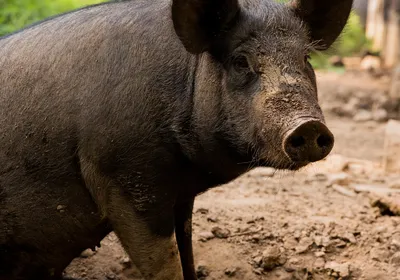
She liked the views of the River Stour and the pig farms which spread across the neighbouring fields. Pigs in holiday mood. They had their own tin chalets and could wallow around in the mud all day. At certain times of the year the fields were full of piglets.
The Blatheringtons once had pig farms themselves. They had owned most of the land this side of Tattingstone yet ineptitude and bad luck and gambling debts meant that over time and bit by bit they’d had to sell and retreat to the overgrown gardens of their estate. Visitors to the Hall—not many these days—admired the oak-panelled rooms full of family portraits of the Blatheringtons in their heyday. In pride of place was Sir Cornelius Blatherington whom Queen Elizabeth the First had knighted for his picaresque adventures against the Spanish. The patch over his eye, an injury incurred during a sea battle, added a dollop of gravitas. In his wake there were stern-looking Blatheringtons who had been in their time Admirals and Generals and Bishops and members of the Privy Council and Foreign Secretaries and captains of industry and judges and explorers and astronomers and headmasters of great Public Schools and ambassadors and Surgeons Royal and Lords Lieutenant.
The visitor only needed a few words with Sir Hector Blatherington, the present incumbent, to realise how precipitously the family fortunes had fallen. Even the evening meal rustled up by the old cook, comprising of turnips and potatoes mashed together in a haphazard way, along with sausages either overcooked or undercooked or in some cases both, was a culinary mystery. In compensation the wine cellar which had once boasted some of the best wines in the country still housed a few glorious Burgundies waiting to be plucked. There hadn’t been a butler for years. The last one fell off the tower in a state of inebriation.
Anyone with a spark of wit, like Great Aunt Margherita, had extricated themselves from the labyrinthine corridors of Crappington Hall and embraced the wider world. That Great Uncle Atticus had taken up a life of crime was neither here nor there. Margherita knew which way the wind was blowing and she possessed a general knack of which her ancestors would have approved. She bought back the old piggery on the edge of the estate, had it modernised from top to bottom, got rid of that porcine odour which had lingered around the building and made it into a luxurious modern home that could be rented out for holidays or short-term lets or whatever took her fancy. Over the years it provided a steady income and when she was down on her luck it was a godsend. She’d asked a friend to design the interior of the house and when it was finished she liked it so much she spent a few weeks there herself. More views of the River Stour and in the distance free-range pigs with their piglets. She enjoyed making the visiting cards—The Old Piggery, Crappington Hall, near Tattingstone, Suffolk.
On several occasions over the last twenty years Great Aunt Margherita had returned to Suffolk without telling her brother or anyone else for that matter and instead of taking her room in the Hall she stayed at the Old Piggery. She wandered around the grounds at night peering into dimly lit rooms. Hector’s dogs went berserk.
‘See why they’re making that racket,’ Lady Monique could be heard shouting in the library.
How beautifully melancholic it was to look at Crappington Hall from the outside. The grounds were so overgrown—Hector called it ‘re-wilding’—it was like coming across a Hindu temple in the middle of the jungle. One night she saw the ghost of Vita Sackville-West. A clear moon revealed her thigh-length boots. She was saying, ‘I’ve heard the gardens of Crappington Hall are in need of some TLC. And I’m the woman for the job.’
The Old Piggery had its own garden shielded on one side by hedges and trees. Suffolk in July was shot through with poppies and wildflowers and Margherita could smell a breeze from the sea as well as honeysuckle and the recently cut grass. Not far from the garden was a little wood and she knew from her youth that psilocybin mushrooms grew there in abundance. Her clandestine returns to Suffolk provided her with some English dream time. She had achieved much in South America. Most of the stories were wide of the mark, some of them had a grain of truth. Ever since she’d bitten off a snake’s head on that famous Amazonian trip her lust for life had been fired up. As she got older she looked younger and Latin men thrilled to the sway of her walk. Though she’d gotten away from Crappington Hall she liked to reconnect with the place on her own terms. In her dreams the Old Piggery was full of noises. Sometimes she woke clutching her heart. Sometimes she felt as if her bones were melting. She meditated and hallucinated and Sir Cornelius Blatherington would drop by for a cream tea or a pint of ale and rabbits made love without inhibition. Sir Cornelius Blatherington made love without inhibition. His eye patch was magnificent.
Lady Monique was known to say to her husband, ‘Cook says she saw Margherita walking across the estate.’
‘Poppycock. Balderdash,’ Hector replied. ‘And Moonshine.’
When Great Aunt Margherita was staying in London she liked to have lunch with her favourite grandnephew. Bartholomew Cleverly Blatherington was affectionately known as Tolly Blathers. He was good with words—talking that is—and charming if not particularly brilliant. Nevertheless he’d managed to get into Oxford because of the Blatherington connection and was doing well in the city. His great aunt was pleased he was in good shape. He’d played rugby and cricket at school and looked as if he might stay the course.
‘I hope you’re not drinking too much,’ she would say. ‘Or taking drugs.’
When he married Lydia Hope his great aunt was delighted. The girl was educated, tall and pragmatic. Her friends called her the langoustine. Lydia ‘the Langoustine’ Hope. She had a job in global communications. ‘Whatever that is!’ Margherita had written to a friend.
Blatherington males over the years had succumbed to every imaginable vice and this had had a notable impact on their ability to procreate. Her brother Atticus had sired several illegitimate children before being incarcerated in The Scrubs. For at least a generation fecundity had passed the Blatheringtons by. Hector and Monique were childless and Margherita didn’t have any children of her own. However no one knew anything about her life in South America. In all likelihood the Blatherington line would dwindle away into minor offshoots. Tolly’s parents were hopeless. His mother was ‘a bolter’ and his father had shacked up with a woman in Bangkok. Might Tolly and Lydia and any offspring they managed to have be the beginning of a Blatherington resurgence? Great Aunt Margherita went back to South America with her fingers crossed.
She visited a witch doctor in the old Brazilian town of Pelourinho, in the state of Bahia. He demanded money. He appeared with white paint on his face and a top hat festooned with chicken feathers and a pot belly. Although Margherita’s Spanish was good her Portuguese wasn’t up to much and in any case the witch doctor spoke a language of his own with only a few Portuguese words thrown in. He took her into a hut full of shrines and masks and soporific snakes and he held her hands and jiggled her breasts and then he began a strange dance punctuated with farting noises. Just when she was thinking she’d wasted her money he began to sing:
Wonderful, marvelous
You should care for me!
Awfully nice, it’s paradise . . .
The witch doctor kissed her cheeks and held his sides, shaking with laughter. It was infectious. Margherita started laughing too. On the journey back to Bogotá she went through the meeting again in her head and decided it had been a positive encounter. The witch doctor had a peculiar smell which was difficult to pinpoint, not entirely unpleasant, which stayed with her for several days. When she’d walked away the big-bellied top-hatted man had shouted ‘Maravilhoso, maravilhoso.’
A few months later she received a WhatsApp message from Tolly. ‘Are you around tomorrow? Some news for my favourite great aunt.’
‘How many great aunts do you have?’
Tomorrow seemed such a long time away even with the time difference or because of the time difference. She lay on her bed having her feet massaged by the gardener enjoying the moment yet making plans in her head. The great wonderful terrible unknown tantalising future.
The following day Tolly pushed the video button and before Great Aunt Margherita had time to compose herself his face—not without charm—appeared in front of her.
‘Great Aunt Margherita!’
‘Tell me what I want to hear.’
‘You’re going to be a great-great aunt.’
‘I knew it! I knew it! That’s marvellous.’
‘You’re the first to know.’
‘How’s Lydia?’
‘The langoustine is doing well. She sends her love.’
Margherita could see Lydia in the background smiling and waving and looking awkward.
‘Has she done all the tests? Is she being properly looked after?’
‘Everything’s going well.’
‘I’m fine Aunt Margherita,’ shouted Lydia.
‘The due date? What’s that? A summer baby, excellent. Has she given up her job?’
‘She’s perfectly well aunt. Her boss won’t let her go yet.’
‘You’ll have to explain what she does. Not now.’
She could see the langoustine moving sideways out of the room.
She didn’t tell Tolly about her visit to the witch doctor.
A month later she was in the flat in Fulham. The love birds were in the sitting room drinking tea. She couldn’t help feasting her eyes on the langoustine. Lydia was a tall thin girl but now she had a promising bump. A pot belly. Margherita thought of papayas. She’d eaten many papayas in her life. She loved papayas. This was promising but after five months—almost six months in fact—shouldn’t the langoustine be bigger?
Tolly had inherited a small flat in South Kensington and Lydia owned a one-bedroomed apartment in Hammersmith. They were living in Tolly’s house but they wanted to find a larger place. What to do? Rent their places out and rent something themselves? Sell their places and buy? Now baby was on the way they were running out of time. They both worked long hours.
The following Tuesday Great Aunt Margherita invited Tolly to dine with her at the OXO Tower. He looked pinched and rather tired.
‘You’re not drinking too much. Or taking drugs?’
It was spring. The evenings were getting lighter. The views of London were marvellous.
‘Tolly Blathers, listen to your old aunt. You’re worried about the baby and the house. You really mustn’t be. You can move into the Old Piggery. You always liked it when you were a boy. It’s a perfect place to have a baby. The langoustine ain’t allergic to pollen is she? Good. Have the baby there—there’s a hospital nearby—and make it your base until you find a nice place for yourselves. Lydia ought to stop working now. I’ll speak to her boss.’
‘You don’t know her boss.’
‘You can work from home. Or catch the train to London from time to time. There’s one which leaves from Manningtree. The Old Piggery will be empty in a couple of weeks—empty of holiday makers I mean. It’s fully furnished. You might want to buy a few baby things. There’s probably an old cot in the Hall. Perhaps not. I’ll arrange for a cleaner and a cook and how about a doula?’
‘A doula?’
‘Prepartum and postpartum.’
‘What?’
‘You can pick up the key from Veronica. Lives in the village now. She’d love to see you. It’s a shame I have to go to Santiago for a couple of weeks. I want updates though. I think I’d better put some money in your account. My dear Tolly, you’re going to be a dad! Isn’t it exciting! Isn’t it marvellous!’
She patted his arm.
As the evening unfolded they watched London becoming an electric kaleidoscope.
Not quite the third trimester. The arrival date was in sight. Great Aunt Margherita was pleased to hear that Tolly and Lydia were comfortably installed in the Old Piggery. The langoustine was delighted with the place. Fine views of the River Stour and in the distance great lolloping sows with their offspring. Lydia was a modern woman. She’d been a vegetarian, a semi-demi vegetarian, a don’t look now vegetarian, a vegan and until recently she had described herself as a pescatarian. The only thing she wanted to eat now was bacon. She woke up in the night drooling for it.
‘You’re in the right place langoustine. I know the best pig butcher in the county. First thing tomorrow I’ll get the supplies in.’
One morning Tolly found his wife standing at the windows in tears.
‘Sweetness and light. What’s up?’
‘Those piglets in the fields. How do I know we’re not going to eat them?’
‘Oh langoustine, you’re such a city girl,’ he said, patting her gently on the bottom.
Great Uncle Hector was delighted Tolly and Lydia had moved into the Old Piggery.
‘Let’s have them round for Sunday lunch.’
Old cook wasn’t happy when he insisted they ate in the great dining room. Several Blatheringtons on the wall.
‘No one’s eaten there for years Sir Hector.’
‘That’s exactly why we should. A new start hey.’
The room was damp and airless. She opened the windows and discovered animal droppings on the floor.
‘Too much work for me alone Sir Hector.’
‘Don’t worry I’ll give you a hand. A bit of exercise will do me good.’
He spent the day lying on the lawn looking at the sky.
Lady Monique suggested pork. They could get a free-range pig at a reasonable price from that nice butcher near the train station and put the rest of it in the freezer.
She added, ‘Better make a vegetarian dish in case Lydia doesn’t eat meat.’
(No need to worry about that.)
‘I could do something with mushrooms,’ cook said.
The not unpleasant aroma of slightly overcooked pork spread through Crappington Hall that Sunday. The dogs were going frantic. Old cook managed to find some plates with the Blatherington crest on them, though two of them had hairline cracks. She found three antique glasses and added a modern one which looked vaguely similar.
Sir Hector visited the wine cellar and came back with some excellent Burgundy.
Cook brought in the roast pork and Sir Hector carved. He’d drunk rather a lot of wine.
‘Shall I take over?’ Monique said.
‘Excellent idea!’
‘Lydia dear, will you have some pork or would you prefer cook’s mushroom dish?’
‘The langoustine,’ Tolly said, ‘has become a born-again porky. Tell Monique about it.’
Lady Monique said, ‘Cook, would you like to join us. Plenty of room.’
‘I’ll have mine in the kitchen if you don’t mind.’
‘As you wish.’
‘Old cook,’ Sir Hector said, ‘do have a glass of wine with the burnt crackling.’
They tucked in.
‘A real corker porker,’ said the head of the Blatherington household. ‘Let’s raise a glass to cook even if she has escaped to the kitchen.’
‘And the pig butcher,’ added Monique.
‘And the baby,’ said Tolly.
The meat was delicious.
For pudding cook brought in a rhubarb crumble. Her speciality.
‘Another corker,’ Sir Hector cried out. ‘Fit for a Bishop’s daughter. By the way where’s my sister these days?’
‘In Santiago I believe,’ Tolly said.
The warm winds of Suffolk were bringing change. Langoustine was getting larger by the day. Bacon sandwiches were in; tofu and aubergine out. And whereas the initial idea was to have the baby in the neonatal ward in Ipswich there was a change of heart after the visit by Mrs Catchpole. The big-bosomed, flat-faced, flat-shoed woman had knocked on the door and taken Lydia by surprise. Tolly had forgotten to tell her the doula was planning a visit. He was in London for a couple of days. The two women had a long chat. If Lydia was a tall thin woman when not with child, Mrs Catchpole had always been somewhat stout. Turned out Mrs Catchpole’s grandfather was a pig farmer and she remembered the Old Piggery when it was a real piggery.
‘Hard to recognise the place,’ she said.
When Tolly came home the langoustine said, ‘Guess what? I’m going to have a home birth. We need a birthing pool.’
‘That’s a banging idea!’
Lydia and Tolly continued to visit Ipswich Hospital for check-ups. They had an NHS midwife called Alison Simper. She was more than happy to help with a home birth.
‘I’m all in favour of them when they work. Not that they shouldn’t work.’
The baby was expected in July. The fields were full of poppies. There had been no rain for weeks. Suffolk was scorched. There was a fire on the heath. Hector, however, loved the summer. He put on his purple shorts and walked around the grounds of Crappington Hall thwacking at the wilderness with his favourite stick. He spotted a woman in thigh boots working in the walled garden. He paid a young man from the village to cut the grass near the house so they could sit out and have a drink in the evening.
‘Some music, darling,’ he said to his wife.
‘You’re in a good mood Hector. What shall we play?’
‘How about Leonard?’
‘Leonard Cohen?’
‘Him.’
‘He’s so miserable.’
‘So are we darling. Happily miserable though—no?’ He reached out and held her hand. ‘We ought to count our blessings, what with a Blatherington baby on the way.’
Lydia and Tolly were sitting in the garden of the Old Piggery looking out over the River Stour. It was a beautiful summer evening and they could hear blackbirds singing. And moving across the wilderness, moving through the air, the words became clearer and clearer:
Dance me to your beauty with a burning violin.
Dance me through the panic ’til I’m gathered safely in.
Tolly said, ‘That’s coming from the Hall.’
Dance me to the children who are asking to be born.
Dance me through the curtains that our kisses have outworn.
Dance me to the end of love.
‘Oh goodness,’ langoustine said, ‘feel this!’ She guided her husband’s hand to her bulging tummy.
Tolly pulled his hand away, such was the force of the kicking.
Great Aunt Margherita had to stay in Santiago longer than expected. Nevertheless she managed to chat with Tolly on WhatsApp a couple of times.
‘The langoustine’s turning into a lobster,’ he said on one occasion and on another, ‘Great Uncle Hector is convinced there’s a ghost with leather boots and a large hat working the gardens of Crappington Hall! Apparently doing a grand job.’
‘That will be Vita,’ his great aunt said.
‘Vita Sackville-West?’
‘Yes.’
‘I thought she was dead.’
‘It’s boring being dead.’
Margherita realised Tolly was worried she wouldn’t make it home.
‘I’ll be there for the birth, don’t you worry.’
‘The baby could come any day.’
Two days before her flight to Heathrow Margherita was walking through the Lastarria District of Santiago having arranged lunch with a new business partner. She was having difficulty finding the restaurant. Oddly, there weren’t many people around that Tuesday. She stopped in her tracks when she heard the singing:
Wonderful, marvelous
You should care for me!
Awfully nice, it’s paradise . . .
She looked across the road and saw a man in a top hat and a bit of a belly. He waved and slipped away down a narrow street.
Margherita’s Boeing 787 was halfway across the Atlantic when the baby slipped out into the birthing pool. Alison Simper the midwife held the baby above the water and cut the umbilical cord. The langoustine wept with joy as the boy was lowered into her arms. It had been a good birth and now he was opening his lungs. Mrs Catchpole was beaming.
Tolly said, ‘Darling, he’s a corker. We should call him Porcius!’
‘You’re such an idiot sometimes,’ Lydia said.
The midwife came the next day and again on day five and reported that all was well. She was amazed how quickly the boy was growing. They had decided to call him Henry—Henry Cleverly Hope-Blatherington. The Hope part would be dropped in official documents according to the family solicitor.
Mrs Catchpole made sure Lydia got as much rest as possible.
Great Aunt Margherita was stuck in London for reasons she preferred not to divulge. ‘I’ll be there as soon as I can. Give the little man a kiss from his great-great aunt. We’d better open a savings account for him.’
She was walking past Lock and Co in St James’s Street. She looked in the window and saw a top hat festooned with leaves. And from inside the shop a peal of laughter.
How peculiar!
She took the train from Liverpool Street, bags of gifts at her feet. At Stratford the train was held for an age and they announced there would be a bus replacement service to Ipswich. Margherita rang ahead and ordered a taxi. She would be staying in her old room in the Hall. As the bus made its way through the countryside the drought came to an end. The rain hurtled down along with flurries of hail. Such was the force of the storm the bus drew into a layby.
She learnt from Tolly that Great Uncle Atticus—nearing the end of his sentence—had been given a weekend pass. A bit like an exeat from boarding school Atticus joked. He would be staying in Crappington Hall too. She rang Hector and told him to lock the wine cellar.
It had been more than a week since Henry was born and Lydia and Tolly could no longer find a reason to delay the moment of revealing their great triumph. Mrs Catchpole didn’t approve. Far too early, she thought. The following day Hector and Monique and Atticus and Margherita and Veronica from the village called by.
‘Offer them tea and a slice of lemon drizzle cake,’ Lydia said.
The Blatheringtons waited for Lydia to get the baby from the nursery. When she walked into the sitting room with her bundle there were murmurs of approval.
The langoustine handed the baby to Great Aunt Margherita. She looked at the little face and wondered.
‘I suppose no one’s going to let me hold the wee chap,’ Great Uncle Atticus said.
Lydia almost dropped the drizzle cake.
Margherita said, ‘First scrub your hands Atticus. A good scrubbing mind.’
Whilst the cake was being passed round Margherita popped out for a cigarette. Tolly joined her. They walked through the back gate and ventured into the woods. Tolly watched his great aunt stoop to inspect the mushrooms.
‘Does Uncle Atticus have a claim to Crappington Hall?’
‘He’s the oldest,’ Margherita said. ‘I would have thought thirty years in Wormwood Scrubs might have acted as an impediment. In fact if you play your cards well Tolly—especially now Henry’s arrived—you could find yourself leading the charge.’
Alison Simper the midwife dropped by on the tenth day. Mrs Catchpole told her Lydia was resting. The baby was in the nursery gurgling.
‘Don’t wake up Lydia. I’ll call her tomorrow.’
‘She needs her rest,’ Mrs Catchpole said. If truth be told, in that summer heat, Mrs Catchpole would have liked to put the whole county to bed.
Alison stepped into the nursery and peered into the cot. The baby stopped gurgling. The birds stopped singing. The midwife got closer. The baby grabbed her nose. Alison had to prise the little fingers open. The baby smelt odd. He pushed himself forward and bit the midwife’s cheek. The baby had teeth! Is that possible? She’d failed the anatomy exam the first time round. Alison Simper wanted to run. She got a needle from her medical bag and took some blood from the baby’s heel. What an odd sound he made! Mrs Catchpole was standing outside the room listening. Alison nodded at the doula, opened the front door and leapt into her Fiat Panda. As soon as she got out of the drive Alison put her foot down and drove like Lando Norris until she got to Ipswich. She needed to speak to the Head Midwife.
The next day was even hotter and baby was listless.
‘Do you think he’s got a fever?’ Lydia asked.
‘It’s the heat,’ Mrs Catchpole said.
‘Has the midwife called?’
‘She will do if there’s anything important.’
Mrs Catchpole wore a large flowery skirt. She was an old-fashioned put the baby in the pram and put the pram in the garden lady. She dressed Henry in blue cotton and rocked the pram in the shade of a tree. Langoustine lay on her bed exhausted. Tolly popped out for some mushrooms. The venerable inhabitants of Crappington Hall lay on the grass with their arms out looking at the sky. The gardener in her thigh-length boots was reading poetry: ‘This country habit,’ she said aloud, ‘this country habit has me by the heart!’
When Tolly came home a couple of hours later the Old Piggery was quiet. He looked in the pram under the tree. The pram was empty. The baby must be with langoustine. When he looked in the bedroom Lydia was sleeping—no sign of Henry. His heart began to race. He checked the nursery—nothing. Where the hell was Mrs Catchpole? A strange woman. He hadn’t liked her much from the start. He rushed around the house. He shouted. He decided to wake Lydia up.
Outside their bedroom was a piglet in a blue top. It stood there oinking at him.
‘Are you my little Henry? Henry Cleverly?’ Tolly asked. He thought he could see the Blatherington likeness.
The piglet side-stepped him, whipped through the sitting room and ran into the garden. When Tolly stood by the sliding doors he could see Mrs Catchpole with a parasol striding towards the River Stour. Henry Cleverly Hope-Blatherington was racing after her, his tail twitching.

Julian Stannard’s most recent collection is Please Don’t Bomb the Ghost of my Brother (Salt, 2023). His new novel is The University of Bliss (Sagging Meniscus, 2024).