In the early spring of 1951 a man named John Keller one day appeared on the streets of a tiny Texas town up near the panhandle and instantly drew suspicion. The newcomer stood six-feet tall with a rugged build and slicked-back hair, wore a crisp black suit and shiny leather shoes which squeaked maddeningly with every step. Keller was conspicuous in Legapee, population 412, consisting of mainly ranchers, small farmers, and their families. The town part was but a few intersecting roads which all led to dead ends except one that connected to a highway after many miles. The people of Legapee lived in a place where nothing ever changed as they worked their land and livestock just as their forebears had, and they were proud of it.
Nobody remembered seeing Keller arrive that day, no fancy automobile or activity at the train station were reported. They just noticed him walking the streets, pacing down the sidewalks with his slow squeaky strides and steady hard gaze. He seemed to them to be taking measure of their town, absorbing and assessing all towards some dark cryptic end. It was Jonah Meade, the grocer, who first came out and said what everyone was thinking, that the stranger’s presence had something to do with Herk Bahnsen, the barber’s son and depraved desperado who three years earlier shot dead in cold blood a US Marshal in a bordello stakeout on the outskirts of town. Bahnsen eluded capture and disappeared across the plains, remaining at large all these years. Legapee was haunted and scarred by the murder and many developed a defensive avoidance of the subject altogether, while others grew quite knee-jerk in attributing any untoward or unusual occurrence in town to the bloody legacy of the barber’s son. As Keller moved through the streets with that stiff, purposeful gait and shoes squawking like a wounded bird, most folks’ thoughts turned to the mad-dog killer they knew as a boy, a rough-and-tumble bumptious young man, before he forever befouled their town’s good name. Outsiders interested in Legapee these days, they knew, were really interested in Herk Bahnsen and the hundred-thousand-dollar bounty on his head.
Eyes followed John Keller wherever he went in Legapee. They certainly wanted Bahnsen caught and executed and the whole horrible business to be done with, but the grim memory of the rowdy boy who became a monster would never be over with the guilt and stigma it seared into their souls. All in all, they simply wanted to be left alone. They regarded Keller with apprehensive stares as he proceeded along Main Street, smoking cigarettes, advancing with deliberate steps, a severe figure in a sharp black suit and noisy shoes. Several boys on bicycles ceased their gleeful cries and laughter as they rode past the somber stranger. Women in the beauty parlor across the street, prattling like magpies as they sat under hairdryers, fell silent upon spotting him through the window. The one car on the road turned down a side alley and the one other pedestrian soon entered the butcher shop, leaving Keller alone to continue his walk until the squeaking stopped as he paused in front of the drug store to light another cigarette. He stood there straight as a soldier, smoking, unaware of the eyes secretly watching him as he admired the bright sunshine and big blue sky stretching across the horizon. He stamped the butt under his heel and went into the drug store. Sid Wilkens, the proprietor, waited for him behind the counter, dressed in his freshly starched white pharmacy smock, his uneasiness now increasing with every squeaking slow step the stark customer took toward him. He waited for the squeaking to end before he asked the man if he could help him.
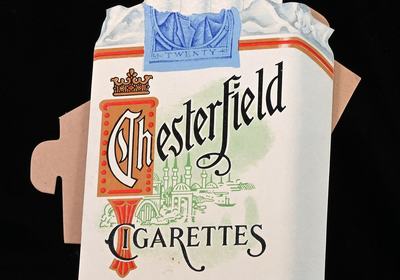
“Yes. I’d like a pack of Chesterfields.”
Wilkens pivoted around to scan the rows of tobacco products and quickly plucked the desired pack. He set it down and said, “That’ll be 45 cents.”
Keller drew the coins from his pocket and slid them slowly across the counter before snatching up the cigarettes and abruptly looking the pharmacist in the eye. “You mind if I smoke one of these in here and hang around a bit? I like your store.”
“Thanks,” Wilkens replied, “I don’t mind at all.” He watched him retreat toward the aisles. “You’re not from around here, are you, mister?”
Keller turned again and pounded the pack into his palm a few times before ripping it open and lighting one up. He gazed hard at Wilkens as he drew in smoke and said, “Not by a long shot,” smoke streaming from his nostrils.
He smoked and paced the aisles, the steady squeaking unnerving Wilkens. Finally he settled beside a shelf of shaving equipment and picked up the deluxe shaving brush to examine.
“So what, may I ask, brings you to our little town?” Wilkens ventured.
Keller, brush in hand, turned slowly towards the pharmacist. “I’m just looking.” A tightness pinched his face as he returned the brush to the shelf.
The Bahnsen business, Wilkens sighed as a dead chill swept through him, his instincts about this man confirmed. He had a fleeting vision of young Herk Bahnsen shoplifting in his store and the boy whipping out a Bowie knife and bolting like a mad devil when he caught him. “Yes,” Wilkens said, regaining himself, “I sincerely hope you find what you’re looking for. If I could help in any way, please let me know.”
Keller weighed the man’s words and studied him a moment in silence. He struck Wilkens as surprised by his kind words and the men just stared at one another until Big Emory Pratt came shambling and mumbling through the door, at which time the black-suited stranger turned and left.
John Keller would spend the night in Legapee, finding a bed in an empty shack behind the gasoline station the mechanic offered him when he inquired about hotels. “The last hotel burned down ten years ago,” the grease-covered fellow explained. He shivered through the cold night in his heatless hovel, wearing his suit as he lay on a hard splintered bunk with a threadbare blanket over his chest. But the cold was not the culprit in keeping John Keller awake, as the man hardly slept a wink since taking to the road nearly six months ago. Not since his wife of 23 years left him, taking their 19-year-old daughter with her, the two women he loved more than life itself vanishing into nothingness and shattering Keller’s faith as he faced the world abandoned, alone. He never saw the thing coming, the wretched day he came home to find his wife’s terse note, “I blame you,” three words enough for him to understand she referred to their daughter, Holly. He lay awake staring at the gray shapes moving overhead, listening to the ululating Texas wind beat against the walls with hissing sand. In vain he struggled to force his mind to remain reminiscing the good years of his family life before Holly’s troubles began in high school. She was always such a spirited girl with striking blue eyes and ruddy cheeks, the spark plug always spreading laughter and nutty fun among her many friends. He thought back to her passion for games like ring-a-levio and kick the can and how she could run faster than even the boys. Throughout her first two years of high school she was a straight-A student, cheerleader, and steadfast volunteer at a soup kitchen. All before she ever thought about going to the poetry and jazz weekend at the college in Pawtucket the summer preceding her junior year. Keller put his foot down forbidding her to go, as it was over two hours away and would encompass spending two nights there. The girl persisted, arguing her friend’s sister, a senior at the school, would be chaperoning the group of girlfriends and all would be safe. Keller’s wife began to weaken to the willful girl’s entreaties, saying to Keller she thought “Holly could benefit from being exposed to a little culture.” Thelma Keller continued to echo her daughter’s case for going until her husband finally acquiesced and allowed Holly to join her friends on the trip. And ultimately, the Kellers would trace the advent of the girl’s downslide to this very weekend. Thelma would accuse Keller of being weak and not standing firm in his opposition to her pleas. As father, she said, it was his responsibility to rein in his daughter when she desired recreation beyond her level of maturity. They never truly discovered what happened to her at the college, but they knew it involved binge drinking, pills, and the awakening of an indefatigable nymphomania which found release at several frat parties. Holly came home a different person, the sweet verve and academic ambition replaced by a moody impetuous girl caught up in her carnal drives. Her use of barbiturates to ward off inhibitions became an addiction, and she tossed back enough wine to leave her on the verge of alcoholism. She ran away from home three times, turning to prostitution to support herself before cops delivered her home from the last sojourn, which stretched over five months in a bordello half-way across the country. She had to drop out of high school, as Keller got her in a good rehabilitation home and provided strength and unconditional love as she recovered. He found an excellent psychiatrist and saw to it she did not miss a session with him. She transferred her addictions to food and ballooned to 180 pounds, but clean and sober, she returned to her studies and received her GED. She read voraciously and developed political views, eventually declaring herself a Marxist to her parents. Thelma blamed John for this too, citing his constant griping about the union at his city supply company. John came to understand that the vivacious happy girl he once knew was gone forever and succeeded by a saturnine, haunted young woman with a propensity to binge eat. But he loved her all the same, even more, if that was possible, so thankful he was to simply have her back home. If he was guilty of anything, it was indulging his daughter with all her favorite treats like ice cream, chocolate eclairs, and Sicilian pizza from Emelio’s. Holly continued to expand while Thelma vilified her husband for feeding the girl’s “safe” addiction. He only wanted to see his daughter smile, he would offer in defense. He plugged away in his clay supply company, hoping his wife would one day forgive him, thanking God every day for Holly’s safe return. But they left him—and the sudden abandonment was too much for him. He was devastated, broken-hearted. He sold his business and house in Rhode Island and boarded a train west and rode the rails to nowhere since, a forlorn beaten man struggling with his pain. He felt an urgency to find the women who ran away from him, if only to see and talk to them once more. He believed he had to reunite with his family to survive. Somehow it would all work out, he occasionally convinced himself. Searching haphazardly for six months before spotting Legapee on a railroad timetable, he remembered the town’s name with a shiver down his back. He could hear again the detective’s husky voice pronouncing it with disdain the day he found her there and called Keller to tell him she was at a place called Ruby’s turning tricks. He felt the same anguish, perusing timetables on a train years later, as the day the detective’s voice spoke to him on the phone, and he decided to go to Texas, the sparse, windblown range up around the panhandle. When John Keller stepped off the empty train that brought him to Legapee, his tortured need to see the place where his daughter plied her trade was well-nigh inexorable.
Supine on a wooden bunk in a cold shack, Keller prayed, beseeching God to guide him to the women he loved. “I will follow Your path to them, my Lord,” he averred. But his mind drifted again to the bordello called Ruby’s, the dark world where Holly wound up, and the old anguish and anger once more besieged his thoughts.
A thin pale light cast a sepia hue through the window of his shack, foreshadowing dawn and gracing the sleepless man with some reprieve. He rose at this first light and prepared for the new day, shedding his fine suit to iron it crisp across the flat bunk, shining his new leather shoes with his buffing kit. He was still John Keller, businessman, and he had to maintain his appearance. He couldn’t let himself go and perhaps lose himself altogether, or he may never find them, he feared.
He began walking into the wind, the sand stinging his face. He crossed the gasoline station and saw the streetlamp was still on and the town yet slept. He realized it was closer to the ending night than the beginning day. The light was soft, gray, everything was closed. He moved with stiff squeaking strides through the desolate streets, feeling the cool iron of his Browning pistol in his jacket. He thought of the detective, a sloppy stout man named O’Hanlin, and the way he said bordello, like you’d say crud or lice, and the detective seemed to include all inside it in his contempt. How did my daughter, a girl like Holly…? he lamented. He hated O’Hanlin, the pig who brought her back, hated his voice saying bordello in his head now in pre-dawn Texas. He fingered the Browning again.
A light was in a window down a long dirt road towards the open plain. The Bluebonnet Diner was an old, rusted cable car planted on the sand-blown periphery of town. Keller walked in to find a lone cook leaning behind the counter, absorbed in a True Crime magazine. A meager, scrawny-faced fellow, the cook paid Keller no mind as he sat on a stool, the only apparent customer. Keller stated his order: two eggs sunny-side up, buckwheat flannel cakes, and coffee. The cook poured him a cup of joe and whirled to the grill without a word, busying himself with his work, leaving his magazine open on the counter. Keller could see he was reading about a bank robber in Kansas who used hand grenades to blow open vaults. He thought the bank robber looked like Lincoln in the photo of him wearing fishing gear. The breakfast came fast and the cook snapped up the magazine before asking: “Is that it, mister?” Another pour of joe and Keller was good, eating in solemn solitude.
Someone started to sing. The lyrics garbled, the melody mangled, but singing was being perpetrated, and Keller grew irked. He spun around on his stool and saw no one. The cook was lost in True Crime. The singing stopped and became a rambling monologue of mostly incoherent fragments, though one drew Keller’s attention. “Ya ain’t gon’ fin’ no damn Bahnsen boy done shot that marshal down he’a . . . no, no, more likely you’ll get you’ ass all shot up in that nice new suit.” Keller took a few more bites and a gulp of coffee before rising and moving toward the corner it came from. His shoes squeaked to within five feet of the corner a head and shoulders popped up behind the seatback in the end booth. The head turned to behold the black-suited figure and slowly roused from a boozy repose. He was an old man with a red puffy mug and white whiskers, wearing ancient oilskin overalls. Keller regarded the grimy individual a moment. “It’s time to take a hike, Old Oloroney!” the cook called over. The old man smirked now and began talking to himself in low, murmured tones, oilrigger talk of a lifetime spent pumping crude. He sang something too, an old ditty about drilling for the black gold. The cook called again, but Keller said, “It’s okay.”
“Why’d you say that about me, getting myself shot up?” Keller asked.
Old Oloroney grinned and nodded as he enticed, “You really want to know why I said it?”
“Yes,” Keller said. “I do.”
“Come sit and I’ll tell ya.”
He settled into the booth and watched Old Oloroney produce a bottle of whiskey and take a good pull. Declining a swig, Keller lit a Chesterfield. “I tell ya for ya own damn good,” Old Oloroney began, “all ya soldiers of fortune comin’ round he’s a lookin’ to bag that hunert gran. Bahnsen, he vanished out there over the plains like a dark cloud passin’ into the night. That boy’s long gone. Word has him down in Rio. Nobody’s never gettin’ ’im no more. The sob will plant one between your eyes sooner than a blinks, should ya get a scent on ’im anyway.”
Keller considered the murderer Bahnsen. So that is it, they believe I am here to capture him, he thought. He did not feel immediately compelled to disabuse them of their assumption. God has led me here, he reflected, and I will stay the course. If I am on Bahnsen’s trail, then so be it.
“You knew this Bahnsen?” Keller asked.
Old Oloroney’s eyes widened and he leaned forward. “Watched ’im grow up. The devil was in the boy from the beginning. Burned down a man’s barn when just a sprout. Lotsa fires. Real menace, he was. Laughed at his own conflagrations. Musta robbed every store in town. Always pickin’ fights with the other boys. Most tough kids, they beat somebody up and that’s that. Herk, he’d have to hurt ’em bad, break their legs with a two-by-four or cut ’em with a blade. He beat my cousin’s boy to within an inch of his life, left that kid with water on the brain.” He paused to ponder and shook his head. “Wicked to the bone. Just vicious, you know?”
“He should’ve been locked up like an animal,” Keller said. “Boy or no boy.”
“They couldn’t get ’im then either. This was no boy, this here was the devil we’re talking about. Some say he was put in Legapee for a reason. Punishment, they say.”
“For what?”
“Nobody could really say. We have our sinners here, but they ain’t no different than anywhere else. Lotta folks maybe like to feel condemned.”
Keller shifted uneasily in his seat, lighting another Chesterfield.
“Somebody will take down your Mr. Bahnsen.”
Old Oloroney let out a raw snicker. “Yeah? You gonna do it? Good luck to you, chief, cause they found one a you bounty hunters a year ago shot up with 88 slugs in him lying half-eaten in the desert.”
Keller stared hard at the old sot. “God will get him in His own way and he’ll wish he was never born. Eternal damnation ain’t no picnic, my friend.”
Old Oloroney realized Keller was riled now and held his tongue. There was a long silence between them and Keller glowered at the old man and stammered until he posed the question he had to ask: “Do you know of a place around here called Ruby’s? A house of ill-fame?”
The old man chuckled slightly. He snuck a quick swig in from his bottle, and Keller again waved the extended offer to drink away. He repeated his interest in Ruby’s.
“Not nobody in Legapee don’t know all ’bout Ruby’s. You know that, mister. Your lookin’ to corral the boy and ya wants to poke around the scene of the crime. You don’t needs to ask me ’bout Ruby’s.”
Keller’s heart raced and his jaw tightened. “You mean where he shot the marshal?” His eyes turned inward as he said softly, “He shot him there, didn’t he?” Holly’s and Bahnsen’s bordellos are one and the same, he understood, and the trail God has put him on now converged.
“They had ’em staked out, he was wanted already for a couple other murders and a bunch of robberies. Wells Fargo truck being the biggest hit. The only thing Herk Bahnsen loved more than stealing money were the whorehouses of North Texas. And man alive, the whores that boy loved most were right here in his hometown at Ruby’s. They say he fell for one too, a young little honey, unripe and pretty like a doll. And the marshals, they knew that. They’re not stupid. It was only a matter of time before the mouse came to the trap.”
“But he got away.”
Old Oloroney nodded. “Still hard to fathom it. Climbed out a back window and crawled to his car, where one of the marshals was standing. It was just that one marshal out back there and Bahnsen shot him twice and drove out of there before they knew what hit them. They botched it up and paid the price. That was three years ago and nobody come near bringing him in.”
There was another timetable corroding now through the back of Keller’s mind, the one which plausibly placed his daughter at Ruby’s during the time Bahnsen was a regular. And the young little honey the old man spoke of…Keller asked him the location of the brothel.
Oloroney responded to his urgency, telling him to take the dirt lane by the saloon and to keep going for a mile or so. Ruby’s sits out on the plains, all by itself, and has been shut down since the killing, he added.
Three young ranch hands now came through the door, conversing loudly as they made their way to the counter. The cook knew them and they shared a few laughs. John Keller rose now and thanked the old man for the information. Old Oloroney nodded and held up his bottle as if to toast, wished Keller good luck, and had himself a belt.
Keller came into the morning light lost in morose thoughts. They watched him roam the streets, invisible citizens, this stranger who entered their lives like a bear at a picnic, anxious with every resonating squeak of his plodding gait. They observed him smoke and search squinty-eyed through their alleys and sidewalks, a dark force in the dry gusty air. In a town traumatized by killing, this man was death itself, the one chasing their evil son who committed grisly murder. The stranger walked alone, the townsfolk avoided him. He smoked a pack of Chesterfields by mid-morning. It was but a speck of a burg in Texas and out of it came a monster, from God’s country came a demon, a cold-blooded killer who stained them all with the blood he shed. And now comes the stain remover, a man in a fine black suit. He espied the name on a train timetable, and it jogged the name of the bordello loose. He knew he wouldn’t find them here, but something else made him come. His quixotic shred of faith was fading, the lost soul on a hopeless mission, Keller clung to the dim dream of a far-flung reunion, perhaps in the blessed prairie lands amongst the tumbleweeds. The image of Ruby’s grew fast like a tumor overtaking his mind, and he bought more cigarettes and a bottle of Jim Beam to accompany him on his hike out to the odious brothel.
By noon threatening clouds owned the sky, announcing the coming rain. The wind swirled sand through the dismal gray with new ferocity, and the lone stranger left town and disappeared on the horizon. The rain and whipping sand hardly mattered to Keller. He was preoccupied with reaching Ruby’s, unable to dismiss that other timetable which put Holly there at the same time as the barber’s son. Not four years ago the slob O’Hanlin found her working there, the shooting occurred three years ago. A sickening scenario was planted in Keller’s head. He trudged forward, sipping his whiskey, smoking Chesterfields, finding himself unsure of the direction on the open plain. Legapee had long receded from view behind him and nothing appeared ahead in the distance. He cursed Old Oloroney, for surely he’d come a mile by now, probably two, and so where was this place?
Coming over a rise in the road he spotted a farmhouse far off on the expanse. As he neared the place he saw the boarded up windows and chain-bolted doors and the sign stating keep out condemned property, which warned of trespassing charges if caught on the site. Keller stood sipping his bottle in front of the porch, staring up at the decrepit structure that had possessed the darkest unutterable recesses of his mind for so long. He smelled of damp earth and the coming rain, regarded its delayed descent hovering high in the dark clouds and the immense sky enveloping him. Slowly he got around to pulling free a few loose boards from a low window, through which he climbed inside.
As Keller moved through the musty rooms he waded past the flotsam of a frenzied police search performed in the days after the murder. The bordello was torn apart and turned upside down in the quest for evidence and information about Bahnsen. Smashed Victorian sofas, rumpled old Oriental rugs, gaudy gilt-and-tasseled broken lamps, ornate wooden chairs in heaps, the first eyes to behold the wreckage in years saw beyond the present and imagined it all as it was when his little girl spent time here. He wanted to see and feel all the pain of his patriarchal failures. In his masochistic trance he ascended the stairs, oblivious to the gaudy angelic-themed wallpaper lining the way to the bedrooms. The doors were open as he passed through the thresholds to view the beds, worn mattresses with messes of sheets and blankets atop, carved wood headboards and posts. For too long he had refused to confront the reality of this Ruby’s, and it occupied his nightmares. Now he was inside the nightmare looking for signs of his lost daughter, whom he saw in everything, yet the forgotten past was conjured up and had him unsteady with dizziness until he sat on a bed. He swallowed some Jim Beam and lit a Chesterfield, reflecting on the vulgar boys of years ago who first began sniffing around his daughter with their animal urges. Most disappeared after encountering Keller’s fatherly but stern admonitions that Holly was too young and off-limits to their dating designs. These moonstruck striplings were properly scared off and soon faded away. But adolescent Holly was an inordinately pretty girl, all peaches ’n’ cream sweetness and charm, and some of her young admirers were stubborn and required follow-up visits from Keller to lose their interest. Typically, he’d lay for them in their neighborhoods and coerce them into his automobile and proceed to “take them for a ride,” during which he’d threaten them with serious physical harm should they continue to keep company with Holly. On a few occasions he found it necessary to slap around the most recalcitrant, boys he termed “juvenile delinquents” or “punks,” and more than once he exhibited his handgun to really close the deal. As a result of her father’s tactics, by the time Holly became a high school sophomore she not only had no boyfriends but not a single boy in her class thought she was worth the risk of getting to know. In short, they feared her from afar. She heard stories from some about her father’s overprotective zeal, but dismissed them as apocryphal excuses by boys who didn’t like her enough to begin with. She loved her father and could never believe he’d undermine her in any way. Her confidence, however, suffered as she came to think of herself as unattractive to boys. Two months before her fateful weekend in Pawtucket she cried to her mother that she was ugly and all the boys hated her. Thelma Keller tried to cheer her up by telling her she was the prettiest of all her friends and the best cheerleader and homecoming queen to boot, but the girl only cried harder, grousing that boys ignore her while all her friends have dates all the time. And Thelma Keller, overcome by her daughter’s pain, revealed the truth to Holly about her father’s overwrought solicitude for her and his occasional extreme way of showing it. Once she knew the rumors were true about her father, Holly lost faith in the man and felt betrayed by him. Something holy and innocent died in the girl, portending the untoward events that lay ahead that summer weekend at the college.
Keller drank more whiskey and chain-smoked as he sat on the bed in the condemned bordello, wanting numbness but being battered with such memories. He eventually discovered that his wife divulged his secret guardian techniques to Holly, but despite the scorn towards him this unleashed in the girl he maintained the rectitude of his actions. The “punks” he policed so vigilantly were who he blamed for his escalating drinking problem at the time, which only intensified his anger and made him drink yet more. In a bizarre way, he felt vindicated by the calamitous weekend at the college and cursed himself for not at least attending the poetry and jazz event himself surreptitiously to keep an eye on her. He was tone deaf but could have disguised himself as a poet up there, he thought, maybe sunglasses and a beret and let his beard grow, as the esthetes seem to favor lately. He recalled a few poets he used to like, Edwin Arlington Robinson in particular. “And Richard Cory went home one night and put a bullet in his head,” he recited aloud, snapping out of his reverie. He also regretted not taking the family to the zoo that summer. Museums too, and the Symphonic Orchestra of Providence. A week in the Berkshires would have provided appropriate culture and recreation, he rued, not a jazz and poetry festival of smut debauchery. A trip to Fenway Park to see the great Ted Williams would have been a fun family outing. Why did I let her go? Why did I relent? he asked himself again and again.
He sat motionless for a long period until his glassy gaze grew aware of something among the pile of hangers, clothes, pillows, and odds and ends in the opposite corner. The partial image of a panda bear sewn into a cream and pink sweater rumpled amidst the heap stared back at him. He remembered his daughter’s abiding love of pandas and her collection of panda-themed objects. The sweater mesmerized him, bored itself into the cognitive recall chambers deep in his brain, soon jelling in the unmistakable realization that this cashmere cardigan adorned with frolicking pandas was the very one Holly wore in Rhode Island before her awful odyssey ever began. With trepidation he approached the pile and picked out the sweater and held it a moment before burying his face into the soft fabric. His chest heaved with each deep breath as the ache in the rear of his throat swelled and caused him to take a knee. And in silence, John Keller wept.
He moved his lips to the words of his wife’s note, I blame you, and saw in his head her bold, hand-printed letters in indigo ink on Manila paper, and shook with supplication for a reversal of time to allow him to raise his little girl right. He would take her to the great art museums of America, the grand music halls to hear the symphonies of Mozart and Beethoven performed by the best, he would master the humanities and turn himself into a Renaissance man who’d educate Holly in the fine arts, and such a cultured young woman of rarified intellect would naturally rebuff the philistine swine who lusted for her fleshly beauty. He would not have had to protect her with such tenacity, and the degenerate punks would not have occasioned his habitual need to imbibe whiskey like they had. Through the crucible of pain he now recognized the mistakes he made, saw with excruciating clarity the difference a family trip to the zoo could have made. An image of the three of them at the zoo would not recede from his mind. In front of the gorilla habitat they are eating sno-cones and waving at the lounging bored apes when the old man patriarch ape waves back. Keller and his wife and daughter laugh together with joy in their transcendent moment between two worlds. Now Keller is buying Holly the biggest cotton candy ever in iridescent colors, as big as a small shrub, and in the bright sunshine he presents it to his daughter. She smiles and giggles happily, tasting the gossamer treat. Sweetness and light, she embodied all the wholesome innocence of American girlhood, he thought, like pinwheels and ponies and pure cotton candy. Why did I relent and let her go to Pawtucket? he asked God once more. Now I am here, and they are gone, and I am to blame. Why?
He belted down some Beam and fired up a Chesterfield, pausing briefly to watch the match burn. He considered the pile before him, the inferno at his fingertips if he let the flame fall. All his pain would be scorched away in a purging blaze…but something now stirred and scampered and scudded from under the bed across the floor, startling Keller. He greeted a hungry prairie dog in a fruitless bid for food, and his match had gone out. His incendiary impulse was gone, for Keller could not harm an innocent creature with his own selfish act of destruction. His guest hastily rooted through the pile before turning quizzically towards Keller and barking, as if to ask, Keller fancied, how the hell did he ever wind up in here? The pudgy rodent darted for the door and Keller said, “You and me both, old buddy. Here we are in hell.” He dragged himself back to the bed and drooped upon it to swig more whiskey and close his eyes, wishing the world away. He miraculously sank off to a doze and when he woke the clouds had finally let loose and the deluge was pounding against the brothel’s roof.
He slogged back through the mud and rain in the crepuscular gloom, half-crocked with a head holding tight to the pleas above for mercy, his prayers sent up against the relentless raindrops. John Keller turned to his Lord in his time of extremity, drunk and disconsolate out on the Texas high plains amid the squalls. He sunk his hands into the wet earth and scooped up a large patch of mire, not very unlike the clay of his former trade, and shouted to the cascading heavens: “This is America, here in my hands, the sweet land of liberty!” He ran onto the puddled range with the mud dripping from his open palms and stopped to yell, “I am an American, goddammit!” He grimaced in revulsion at the thought of his daughter being a Marxist. “They got her! What is happening to our country? They’re brainwashing our kids!” He threw the mud left in his hands down and muttered, “They defiled her, body and mind . . . my beautiful girl.” He again gazed up at the stormy sky and begged God not to forget about him, to lead him to his family.
The whiskey made it even harder for Keller to find any sleep that night. In only his boxer shorts and the threadbare blanket he lay on the bunk in the cold shack, his soaked sludgy suit hung over a chair to dry. The unrelenting rain pelted the roof with its bitter tattoo and the gales whipped against the walls with great whooshes and rattling. His mind tormented him with no less severity than the storm’s, his thoughts awhirl with morose imagery. He saw Holly as a girl blithely skating on the pond by the woods, showing such grace and ease, and afterwards taking her for hot chocolate at the little café in town. They shared some silly laughs and she told him about a dog she met named Cuckoo whose owner seemed nuts the way he called the dog’s name over and over. “Cuckoo…Cuckoo…come here, Cuckoo!” she imitated him to her father’s laughter. In the cold shack he remembered them laughing together over this dog, and it seemed so close he could touch it, like it just happened and the delightful girl was still there in Rhode Island with her mother and they were waiting for him to come home. He listened to the squalls pummel the shack and the thought of the condemned brothel vanquished him all over again. He lay on the hard bunk staring up at the dashing shadows, praying for sleep, one deep long repose.
Later, in the early morn blackness of night, he heard something at the door. Light tapping, perhaps the scratching of an animal scavenging for a snack and respite from the gusts. It grew louder, faster, more deliberate, someone was out there knocking. Keller rose, wrapped the blanket around him, and went to see who it was. Maybe a divine messenger has come to deliver me from all this, he thought for a second. He opened the door to behold a slight, unprepossessing man, balding with wire-rim glasses, wearing a raincoat and an anxious expression. The rain had by now given way to a soupy mist, but the gales blew undiminished.
“I come to talk to you sir,” the man said, pausing. “About Herk Bahnsen.” The wind buffeted his side, sending his meager frame off-balance and forced to reposition his stance.
Keller regarded him from pit to dome with a feral intensity before inviting him in.
“I can’t talk here,” the night visitor said, not meeting Keller’s eyes. “We’ll walk somewhere.”
Keller looked out into the black swirling moisture. He nodded. “You’ll have to wait while I get dressed.” Even such a harsh night was better than lying sleepless in his cold shack, he thought, and their connecting him to Bahnsen’s trail made him again contemplate a destiny devised from above. The night visitor came inside the shack and stood by the door. He watched in bewilderment as Keller picked up the black suit and shook off the dirt and began to iron the trousers and jacket and white shirt across the wooden bunk. He kept quiet as Keller moved on to his new leather shoes, still coated in muck, wiping, buffing, and polishing them with great care until they shone like new again. The visitor also took notice of the woman’s cashmere cardigan emblazoned with pandas and considered a moment the lady of the lawman’s life. He failed to catch, however, the Browning pistol Keller slipped into his pocket when he finally donned his suit.
They walked in silence in the raw blustery mist, through the vacant swampy streets. Keller followed the spare fellow’s lead toward the edges of town, stealing an occasional glance at the wispy worried figure fighting the wind beside him. Who has come calling for me at such an hour, Lord? Are you calling me home by his knocking in the night? He noted, disconcertedly, his new shoes were soaked through to his socks and caked in thick dripping mud. They no longer squeaked. He regarded them for several strides with chagrin, but soon grew indifferent to their sorry state.
They turned up at the old train station, which once regularly received great roaring locomotives but had now fallen into desuetude. “It’s always deserted out here,” the slim fellow said upon reaching the platform adjacent a small waiting lodge. Keller recalled the station being empty when he arrived two mornings ago, he being the only passenger aboard his train. He lit a Chesterfield. The slight one produced a flask of rum from his raincoat and added, “No one leaves, no one comes here no more.” He took a pull and offered it to Keller, who welcomed some hair of the dog. “No one except me and you,” the slight stick of a man continued.
On the creaky platform boards in the pale station light the two men stood sipping rum and Keller’s night visitor said: “I know you’re a lawman or bounty hunter of some kind looking to round up Herk.”
Keller smoked reflectively, delaying a reply. “I am a man who wants to see justice done,” he said.
The slight man adjusted his glasses and peered down the tracks into the wet wind. “I want justice too.”
“An innocent man was slain in cold blood.” Keller considered the hundred grand for a moment, how it could help his family, once he found them. The notion quickly dissolved, perished by the futility of his search. “You got something to tell me, mister?” he demanded now.
The slight man swigged his rum and smiled wistfully before he began. “You know, he used to take a train out of here to Whiteflat to get his haircut, oh, from the time he was 11 or 12 on.” He let out a snicker. “Said he outgrew me, the barbers over there suited his style more. They didn’t scalp him, used fancy wild root. Called me an Apache with scissors.” He chuckled. “I didn’t care. The wife and I thought it was funny. Our headstrong little man.”
Keller understood he was conversing with Herk Bahnsen’s father, the barber.
“Funny thing is,” he continued, “the shop I work in now is in Whiteflat. They ran me out of here on a rail after all the trouble began. Boycotted my shop. They blamed me.” He knocked back more rum and shook his head. “Name’s Reed,” he offered. “Herk’s my boy.”
Keller nodded, looking him in the eye. A twinge of disgust and loathing accompanied his every breath, tempered by a modicum of pity. He saw a weak man who raised a killer standing in front of him. The living embodiment of failed fatherhood at its very worst. How does he live with it? Keller wondered, aghast. The smidgen of pity fluttered ever so slightly. But the boy, the monster who shed so much blood and lay with an unripe pretty little doll in the whorehouse, it made so much sense to Keller why God put him on the trail of this man’s son.
“So what do you have to say to me, Reed?” he asked, enunciating the barber’s name with disdain.
“Word come to me you were in Legapee beating the bushes for Herk and I knew sooner or later you’d be at my door pressing me for my boy’s whereabouts. They always do, come to me like that. But, I tell you sir, on my wife’s grave so help me God—I have no idea where he may be.”
Keller lit himself a Chesterfield and glowered at the pathetic figure. He sired a brute who terrorized the people of North Texas and destroyed lives. He unleashed his beast on them to spill their blood, good innocent God-fearing people. His hand felt the cool handle of his pistol in his pocket. Some of the dirty loutish punks who hounded Holly came back to him now, he saw their lascivious little smirks, their insolent attitudes. One of them could’ve grown up to be a Herk Bahnsen, he judged. The pistol felt right in his grip, nice and clean and direct.
“You ever been out to the brothel where your wonderful son shot himself a US Marshal?”
Reed Bahnsen shook his head, rattled by Keller’s tone. “Never. Look, I feel terrible over what happened. I’d give my life if it could bring that man back and Herk would have another chance to start over again. I’d lay down my life for my boy, I swear to you I would.”
Keller studied him, smoking a Chesterfield and tossing it under his muddy heel. All the pain and guilt he’d been carrying for so long seemed to crystalize into one flash of fury. He pulled the pistol out of his pocket and trained it on the barber. “I may be able to accommodate you on that, Reed,” he said. He held the Browning on him and grinned, carefully gauging his captive’s reaction. “After all, Reed, someone should have to pay for what your son did.”
The barber sighed deeply and stared down at the platform with his arms akimbo. He stayed like that, still and unflinching. “Shoot then, if that’s what you have to do. I will gladly die for Herk. Maybe I am responsible for his crimes. I guess I should have shown right from wrong better. He needed someone to kick the everlivin’ shit out of him and I wasn’t up to the task. I didn’t do my job. So go ahead, mister. Kill me. I don’t have much to live for anyway.”
Keller scowled at the wretched man capitulating before him and realized this was going to be difficult. A tiny dollop of compassion was seeping into his view of him.
“What did he tell you about Ruby’s, Reed? I want to know everything he ever said to you about the place.”
“I hardly saw him anymore during that time. He never spoke of it.”
Keller cocked the hammer and readied his finger on the trigger of the Browning. “Don’t push your luck, Reed.”
“My boy is guilty, sir. Everybody knows it. Herk would be the first to admit he done it. The boy was honest that way, that much he was.”
“I’m talking about the girls there. He ever say anything to you about the girls at Ruby’s?”
“Nah. Herk had been going there since he’s 13 years old, that I know. But me and him…never discussed those sorts of things. Never once.”
Keller grudgingly recognized something true in those words. He believed the man. And he knew he could not shoot him, nor any unarmed defenseless man. He remembered he was a man of God and men of God do not kill. He asked God why he was there, begged Him for mercy. He brought the gun down to his side. “You brought me out here to tell me you don’t know where your son is?” he asked the barber incredulously. “That’s all you have to say?”
“No sir, there was something else.” Reed Bahnsen hesitated, his gaze fixed on the pistol yet in Keller’s right hand. Keller accommodated him and returned the Browning to his pocket. The barber relaxed a bit as he began: “I really came to ask you something. It would mean a great deal to me if you can assure me that my son is out there somewhere, still a fugitive. I just want to hear that you have it on good authority he is still alive. Could you give me that much? I truly fear my boy may be dead.”
“What makes you say that? If your son were dead, you’d be notified. It would be in the papers, too.”
“Not if he died hiding out in the mountains or desert or disappeared in some remote backwards country, where he could be lying there and nobody’d come across him.” He paused and sighed. “You know, people say things but I loved that boy with all my heart and tried to bring him up right. At 13 he was already too tough for me…could beat up his old man at 13.” He frowned. “His mother was always making excuses for him. She loved him so much. But Herk was a bad kid.” He looked into Keller’s eyes. “Real bad. That boy loved me though, yes he did. In his own way. Years later even, when he knocked off that Wells Fargo truck in Abilene—he wrote me a letter and said he did it for me, to show me what he was made of, to use his words.” He shook his head and shrugged. “So do you have it on good authority or not?” He looked out over the tracks where the gales lashed against an old railroad sign flapping and clanking on its bent pole. “Never seeing my boy again would be more than I could bear.”
Pity overcame Keller now. He held the barber’s eye and spoke with conviction. “Your son is believed to be still at large. Some say he fled to Argentina. Others, like myself, are sure he has never left Texas. But everyone agrees he’s out there somewhere.”
Reed Bahnsen smiled wanly as Keller lit a Chesterfield. The poor bastard, Keller thought, why not give him a scrap of comfort?
“I just hope they take him alive,” the barber said. “All I want is to see my boy again.”
Keller thought about his wife and daughter. Knowing they walk this earth somewhere is a source of hope, he reflected. What if something awful happened and they were killed before he ever saw them again? A chill went through him. He asked God to watch over them and guide him. I am lost, Lord, I am lost, he said to himself.
The rumble and whistle of a distant train now grew audible. The night had begun to yield to a smoky amber grayness. The winds appeared milder and the mist seemed to lift somewhat, as if burned off by the burgeoning day. They heard a bird singing and a bluebird swooped in from the tracks to alight on a bench back right by them. The two men gazed upon the trilling bird as it continued its concert, its blue feathers glistening in the pale light. Keller thought he never heard a bird sing more beautifully. They stood rapt in the avian minstrel’s exquisite songs and when it finished it marched the length of the bench like a drum major who was turned into a bird. Then, with beak held high, it turned its head toward its audience, as if waiting for applause, before soaring off into the gray morning. The train whistle blew once again and the resonating thunder of the approaching locomotive became louder. They waited in silence, each man engaged in his own thoughts.
During the bluebird’s performance Keller felt a divine warmth come over him. As he opened to the bird his mind cleared and a sense of well-being allowed him to imagine a way back from the despair. The bird relieved and gladdened him. He felt safe and loved and even the horrible prospect of never seeing his family again, suggested by the barber’s fears, was met by a sublime answer of reassurance. Death is only a longer separation until we are reunited with our loved ones, God will see to that. We will be with Him. Keller related his epiphany to Reed Bahnsen, who said he recalled such ideas from his church-going days but could never put much stock in them. Just as well, Keller reasoned to himself, since there’s no way his son would ever make the cut.
The locomotive finally came roaring into the station, fulminating and steaming to a grand halt. Reed Bahnsen shook Keller’s hand, thanked him for affirming that his son was alive, and turned to board the train. Keller watched it build up steam and chug away into the pale-silver dawn of North Texas plains. An hour later he was back at the station with his suitcase, waiting for a train of his own to begin his journey back east.
John Keller took a job with a brick manufacturer in Newport, Rhode Island, and lived there alone until his death in 1973. On Christmas Eve in 1957 he received a surprise visit from his daughter, along with her husband and baby son. It was their first meeting since she left home with her mother six years earlier. As they caught up, Keller got to know what most would call a typical young mid-century American housewife who happened to be his daughter. He managed to repress his instinctual dislike of her husband Fred, a union organizer, but over time he would find abiding his son-in-law to be less and less of a chore. And, of course, he was thrilled to hold his grandson in his arms. It would be John Keller’s merriest Christmas. Holly visited her father again after that, but only sporadically, a major holiday now and then. Although Keller suggested several times to his daughter how nice it would be if they all took his grandson to the zoo, the trip never materialized. His wife remarried and lived in Providence. He never saw her again, and she continued to blame him.
A bordello in Laredo was surrounded by Texas Rangers as Herk Bahnsen copulated inside on February 16, 1952. When he came outside he was shot down upon refusing to surrender and attempting a run to reach his new Cadillac with two guns blazing. Reed Bahnsen never did see his son again. In the days following the desperado killer’s death, the barber remembered the words spoken by John Keller on the station platform one raw early morning in Legapee about death amounting to only a longer separation. He still could not put much stock in the concept.

James Damis is the author of the novel Zeke Borshellac (Sagging Meniscus, 2024) and the novellas Dupes and Liars and the Lost Shore Town (BlazeVOX, 2022) and Filial Sojourn (Running Wild Press, 2025). Born in Hoboken, he lives in New Jersey with his wife and daughter.