Murder, mayhem, spies and counterspies, bad marriages, bad judgment, frenemy queens, political and religious turmoil, field and castle battles, warring lords, webs and nests of intrigue and deception, shifting alliances, betrayals, tower lockups, daring escapes in the darkest night . . . For both edification and entertainment, a reader could do far worse than settle in with the Mary, Queen of Scots archive on a long winter’s eve. It is now more than four centuries since Mary Stuart lost her head in the country of her rival and cousin, Elizabeth I, and yet her person and the events of her eventful life continue to cast a spell. Publications about the queen kicked off, as Scottish historian Jenny Wormald reminds us, in the late sixteenth century, picked up again in the mid-eighteenth century, and have flourished “almost without interruption” ever since, modern readers falling prey to what Anna Groundwater IDs as an “over-identification, an empathisation . . . with what they imagine was Mary’s experience.”
The child of James V and Mary of Guise, Mary Stuart inherited her father’s throne mere days after her birth, her dead father’s only surviving legitimate offspring. Hustled off to France at age five in part for her safety during Henry VIII’s attacks on Scotland during The Rough Wooing, she married, age fifteen, the fourteen-year-old Dauphin Francis, briefly served as the queen of France as well as Scotland, then returned home in 1561 as an eighteen-year-old widow to preside over six turbulent years of Catholic/Protestant unrest, during which time she twice married, gave birth to James VI, was imprisoned and forced to abdicate the throne in her own country before fleeing to what would become a near nineteen-year English imprisonment (albeit imprisonment “with privileges,” notes Antonia Fraser) and death on the scaffold, having been judged guilty of plotting against the English queen.
To the superstitious, Mary’s transfer, France to Scotland, brimmed with ill omens. At the onset of her voyage, two boats collided in the French harbor within view of Mary’s ship. The more damaged of the two vessels sank; its entire crew perished. A thick fog, known locally as a “haar,” greeted Mary’s arrival at Leith on August 19, 1561. “The very face of Heaven did manifestly speak what comfort was brought into this country with her, to wit, sorrow, dolour, darkness and all impiety . . . The sun was not seen to shine two days before, nor two days after,” caterwauled John Knox, minister of Edinburgh’s St. Giles’ Cathedral and the Reformation’s prime standard bearer in Scotland.
In a country officially declared Protestant in 1560, Mary, a Catholic, continued to observe mass privately, placing her at loggerheads with Knox and his ilk. The Protestants wanted to quash thoroughly the old religion; the Catholics wanted to regain their former dominance. It was all very tricky, what with Protestant England close by and the country’s (and Mary’s) strong ties with Catholic Spain and predominantly Catholic France. Perhaps no sovereign could have kept all parties happy. The sympathetic Rosemary Goring (Homecoming: The Scottish Years of Mary, Queen of Scots) concludes that “from the start,” Mary “was out of her depth.” Jenny Wormald (Mary Queen of Scots: A Study in Failure) is less excusing, more emphatic: “There can be no doubt of her failure as a ruler.” Wormald describes Mary as “someone born to supreme power who was wholly unable to cope with its responsibilities,” a queen who “never stopped at one mistake where two were possible.” Raised in the French court, preoccupied with matrimonial possibilities and covetous of the English crown, Mary never was all that interested in her native land, Wormald contends, a queenly indifference “staggering by any standards.”
In print, the queen’s reputation took an early hit from George Buchanan’s Detection of the Doings of Mary Queen of Scots (1571), a propaganda piece penned to justify the deposing of the queen by the Scottish Confederate Lords on the basis that she had connived with co-adulterer and eventual husband, the Earl of Bothwell, to murder her husband of record, Lord Darnley. John Guy (My Heart Is My Own: The Life of Mary Queen of Scots), representing majority opinion, calls Detection “the most artful piece of character assassination ever devised in Scotland.” The screed was riddled with timeframe inaccuracies and relied heavily on the Casket Letters, those lovesick missives written (supposedly) to Bothwell from Mary and filled with schemes of ill-usage where Darnley was concerned. Most historians now consider those letters part forgeries and part mix-and-match sections of other letters written by Mary, cobbled together by her foes to show the queen in the worst possible light. A Buchanan follow-up in 1582, History of Scotland, continued—and deepened—the vilification, serving as the established portrait of Mary for two centuries. The queen’s harshest critic had not started out as an implacable enemy. As a member of the Scottish royal court, Buchanan served as Mary’s tutor, helped her compose poetry, and couldn’t say enough about the queen’s “loveliness of form” and “fine qualities of mind.” The combination of Darnley’s murder and the scholar’s own fervent embrace of Protestantism reversed that good opinion and reversed it permanently. Later, as tutor to Mary’s son, James VI, Buchanan considered it “his duty to teach James that his adulterous mother had murdered his innocent father” (Rosalind Marshall, Mary Queen of Scots: Truth or Lies). James, for his part, grew to be a “practiced deceiver by the time he reached his teens” (Fraser, Mary Queen of Scots).
Even for more recent/less virulent chroniclers, the extent of Mary’s involvement in Darnley’s death remains an area of fierce contention. Alison Weir, in Mary Queen of Scots and the Murder of Darnley, builds an entire book around Darnley’s offing. Weir, who describes Mary as “one of the most wronged women in history,” concludes that there is “not sufficient evidence to prove” that Mary had given the go-ahead. Fraser agrees that Mary “had not known of the crime beforehand and was not implicated in its details,” but adds that she “could hardly have been ignorant as to who were the authors of the crime.” Stefan Zweig (Mary Queen of Scots) maintains that Mary knew about the murder and was forced, by Bothwell, to agree to its being carried out. Martin Hume (The Love Affairs of Mary Queen of Scots: A Political History) has no patience with Mary apologists: “The avoidance of any direct responsibility for violent acts was one of the primary points of a sovereign’s trade . . . Do Mary’s thick-and-thin defenders expect that her accusers could . . . produce her plain uncompromising acquiescence in writing?” Jenny Wormald’s take: “The probability that (Mary) was massively involved in the murder of Darnley is very strong.”
Darnley’s star had begun to dim some time before his death. Denied by Mary the Crown Matrimonial, which would have made the pair joint rulers of Scotland, he sulked and schemed. His substantiated role in the murder of Mary’s private secretary, David Rizzio (sometimes spelled Riccio), further fractured the marriage. It was known that Mary was considering divorce. By turning on his co-conspirators and denying any culpability in ridding the court of Mary’s favorite, he more or less sealed his fate. “Burning the enemy’s house over his head was a comparatively common sixteenth century practice,” Fraser tells us. Blowing up a residence was special-level revenge. At Kirk o’Field in Edinburgh, as the king prepared to bed down above a cache of gunpowder, something spooked him. Darnley and his valet-de-chambre hurriedly exited the building through a window only to be seized and smothered (or strangled, depending on the biographical source) in the garden in the aftermath of the blast. The optics were not good. A husband Mary wanted to shed had been shed. However, as Martin Hume points out, “Murder was at the time almost as legitimate an instrument of policy as matrimony.” It wasn’t the murder per se that took down the queen. It was her behavior thereafter. Not only did she drag her heels about prosecuting those responsible, within months she had married the Earl of Bothwell, a man up to his eyeballs in the Kirk o’Field plot.
A second area of intense scholarly dispute is whether Mary was raped by Bothwell prior to her hasty third marriage. Weir believes so. Fraser’s measured verdict: “Rape was not the sort of duty from which Bothwell was likely to shrink.” Guy speculates that Bothwell “talked her round” to having sex prior to marriage. Zweig, the committed Freudian, opines: “Women are apt to fall passionately in love with a man whom they simultaneously fear and admire, one who arouses in them a sense of horror and peril which exerts a mysterious lure.” Zweig’s entire premise is that Mary was besotted with Bothwell, no rape necessary. Mary herself assured John Craig, Knox’s church colleague, that she had not been “ravished” because Craig refused to issue the banns of the marriage to Bothwell without that assurance. In later writings, the queen intimated she had been coerced. While kept at Lochleven Castle by the Confederate Lords, Mary suffered a miscarriage. Among the stranger rumors: Mary didn’t miscarry twins, as is generally accepted, but safely delivered a baby girl who was smuggled off to France to be raised by nuns.
Topics debated less heatedly: whether Mary in fact loved any of her husbands; whether she spoke Scots with a French accent; which exact lord held a pistol to Mary’s pregnant belly during the Rizzio slaughter; whether John Knox was as important to the Scottish Reformation as he thought himself to be; whether Mary’s successful Lochleven escape after ten and a half months of captivity, dressed in maid’s clothing and crucially assisted by the young, enamored Willie Douglas, reflected her second or third attempt to flee.
Points on which biographers agree: Mary’s fixation on the English crown and obsession with having her right of succession, as a direct descendant of Henry VII, recognized by Elizabeth. In that quest she was both relentless and unwavering. Also: whatever befell her, whatever the circumstance, she retained, in Rosalind Marshall’s phrase “a strong sense of her own majesty.” Other areas of consensus: man trouble. The woman had terrible luck with husbands. Francis II died two and a half years after their wedding, a union very likely unconsummated. Handsome and golden-haired though he was, Lord Darnley proved to be a pill: vain, venal, immature, a drunkard and syphilitic given to late-night carousing in non-royal Edinburgh enclaves. Bothwell, despite a stint of polishing at the University of Paris, remained a violent, profane and crude fellow. Within the family, Mary’s half-brother, the illegitimate Earl of Moray (sometimes spelled Murray), constantly worked against her while pretending to do otherwise. Her son, James VI, made deals behind her back with her rival, Elizabeth I, seemingly more interested in securing his own English succession than in freeing his imprisoned mother. Other than James VI, who achieved his and his mother’s goal of also ruling England and Ireland, it is equally true that those troublesome-for-Mary men came to unhappy ends. Darnley: gang-murdered before his twenty-first birthday. Bothwell: rendered insane before expiring in a Danish prison. Moray, having clawed his way into a position of power as Regent of Scotland, assassinated in 1570. (To express approval of the Moray elimination, Mary paid his assassin a pension.)
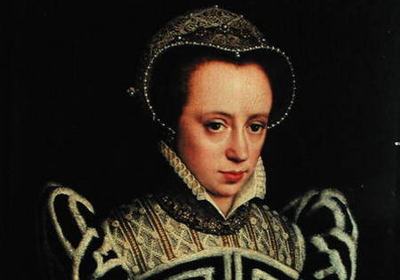
Mary herself is typically described as lovely, despite a “fairly large and aquiline” nose (Marshall). In 2013, using 3D modeling software and craniofacial templates, a team of forensic experts from the University of Dundee, headed by Professor Caroline Wilkinson, created a “virtual sculpture” of Mary’s face that supported the claim. Yes, Wilkinson told the press, Mary did have “quite a big nose and strong chin.” The queen, it is also agreed, was unusually tall (5′ 11″), auburn-haired, outdoorsy, a skilled—and tireless—horsewoman (after her army’s defeat at Langside, Marshall reports, the queen “rode for 92 miles without stopping”), an accomplished huntress, a keen dancer who also loved her cards, a music fan who played the lute and the virginals; someone who, in captivity, took up embroidery with a vengeance, examples of which can today be found in the Victoria and Albert Museum. She was often physically ill—perhaps from a gastric ulcer, perhaps from porphyria, a genetic disorder. When opposed, she was prone to emotional collapse. Even so, she could charm a snake and succeeded in charming an impressive number of adversaries as well as allies, young and old. The rare exception seems to have been the person she wanted, at least for a time, most desperately to charm.
Queen Mary and Queen Elizabeth were not twins in temperament. As a talking head on the BBC production “Bloody Queens,” John Guy went with this sound bite: “If you want to choose a good date, you’ll choose Mary over Elizabeth every time.” Zweig rejects the portrait of a “cruel,” “inhuman,” “cold,” “hard” Elizabeth, but, unsurprisingly, given his Freudian allegiance, classifies her “weathercock behavior” as “frequently assuming the aspects of hysteria.” To Fraser, Mary is a creature of “intense nervous energy” and “reckless courage.” Elizabeth had the more calculating, suspicious nature; she also had better advisors. Most critically, according to Hume, “Elizabeth had the strength to remain single.” The two queens—despite Mary’s desire and movie fantasies—did not meet. Guy feels certain the reason lay with Elizabeth’s “fear that the younger, possibly more beautiful Queen of Scots would overshadow and surpass her.” Wormald thinks it far more likely Elizabeth passed on a face to face to avoid being “tiresomely nagged” in person “about the point she would not openly concede, the English succession.”
Mary’s execution at Fotheringhay Castle on February 8, 1587 is the stuff of legend. Although the profundity of Mary’s Catholic faith has been challenged, for her finale she played—meticulously and to the hilt—the role of Catholic martyr, meeting her doom in an outfit of red. (A “dark red, a sort of crimson-brown, not scarlet as is sometimes suggested,” clarifies Fraser.) For many, Weir reports, the stage-managed final image and execution “wholly blotted out any memory of her previous dubious reputation . . . and inspired the romantic tradition of the tragic heroine.” Even the otherwise ill-fated Anne Boleyn was granted skilled dispatch by a French executioner and a sharp sword. Mary’s executioner, wielding an axe, botched the job. After two tries to separate head from body, he used his instrument to saw through the last of the connecting sinew. When the decapitated head was held aloft for the crowd’s approval, Mary’s skull separated from its lush red wig and exposed the 44-year-old’s actual sparse gray hair. One of her dogs, a Skye terrier, had earlier wormed his way beneath her skirts and emerged to whimper alongside his mistress’s corpse. The woman who for so long had bedeviled Elizabeth I was no more, finished off by the state’s barbaric method of removal. And yet. As the condemned-to-death Mary character in Liz Lochhead’s play Mary Queen of Scots Got Her Head Chopped Off taunts: “Poor Elizabeth. Tonight you dance in my dream. Tomorrow and ever after I will dance in yours.” Creative invention, but very likely the case.
In her send-up The History of England from the reign of Henry the 4th to the death of Charles the 1st, teen Jane Austen is Team Mary all the way, declaring the “bewitching Princess . . . entirely innocent” of all crimes ascribed to her and “trusting” that such authorial “assurance” is sufficient to cancel “every Suspicion and every doubt which might have arisen in the Reader’s mind.” (That Jane. She did like to poke fun across the board.) In her final novel, The Finishing School, Austen’s sister in satire and Edinburgh native Dame Muriel Spark presents character Chris Wiley, a student at College Sunrise, who is writing a novel about Queen Mary but can’t be bothered with historical theories “one way or another.” He’s after “a good story. It was to be an excitingly written novel, in addition to its originality. It was to be popular.” (Now there’s a joke to parse.)
One of the many Mary, Queen of Scots-inspired novels, Sir Walter Scott’s The Abbot (1820) reanimates the Lochleven confinement and escape, skips the second pregnancy and miscarriage, and ignores the execution altogether. Flora Carr’s The Tower (2024) also focuses on the Lochleven interval of Mary’s existence, her close friendships with her women-in-waiting, and Mary’s attempts to escape the island. Two pages before the end of the 2018 children’s book Mary, Queen of Scots: Escape from the Castle by Theresa Breslin (Teresa Martinez, illustrator), courageous Mary has crossed the loch and “gallops off to freedom” on a “fast horse.” But, as in the darker fairytales, courage and bravery do not guarantee a happy ending. Mary’s ending was what it was, and Breslin’s retelling doesn’t spare the kiddies that stark fact. Not every reader of MQS fictions, however, is game to wallow in the negative. Recently, the historical novelist Jean Plaidy came in for some online bashing because of a perceived anti-Mary bias in Royal Road to Fotheringhay (1955), a list of eighteen “derogatory adverbs and adjectives” provided as evidence that the author did not “like” or “have very many nice things to say” about her subject. (Not only that! Plaidy had dared repeat those pejoratives “more than once.”) In The Infinities, John Banville, master of many fiction genres, serves up a world whose history includes Mary’s reign over a Catholic Britain, her enemy, the traitor Elizabeth Tudor, having been successfully dispatched.
For tourists on the Mary, Queen of Scots trail, there is no shortage of Mary-associated castles, both standing and crumbling, to visit. Linlithgow Palace, her birthplace. Edinburgh Castle where, after a difficult labor, she gave birth to James VI. Dundrennan Abbey, where last she slept (or tried to sleep) on Scottish soil, and numerous others. For armchair travelers, Rosemary Goring, in both Homecoming and Exile: The Captive Years of Mary, Queen of Scots, has made the pilgrimages for us and describes at length what the modern visitor can expect to encounter onsite. The “alluring ruin” Lochleven Castle can be reached by means of a ten-minute boat ride from Kinross. The tower house, where Mary would have spent much of her time, remains, but because the water level of the loch was lowered in the 19th century, the island itself has quadrupled in size since Mary’s time. Bug alert: Undiscovered Scotland bloggers advise visiting “on a windy day. We have never encountered as many mayflies anywhere in Scotland as on a visit to Castle Island in May.”
The Execution of Mary Stuart (1895), an eighteen-second “short,” marked Mary’s first cinematic appearance. A “stop trick” (jump cut) technique made the beheading scene possible. Produced by Thomas Edison, Mary was first played by a male actor, Robert Thomae.
In Mary’s Hollywood era, Katharine Hepburn, sounding very much a Connecticut gal, played Mary in John Ford’s Mary of Scotland (1936). In this adaptation of the story, there are musical numbers as well as heated romance. Although based on a stage play by Maxwell Anderson and not Stefan Zweig’s then hot-off-the-press biography, Zweig must have been pleased with the script. In the film, Hepburn’s Mary is gaga in love with Frederic Marsh’s Bothwell. (The 2013 film, starring Camille Rutherford, was based on Zweig’s biography.)
In the 1971 release Mary, Queen of Scots, Vanessa Redgrave as Mary squares off with Glenda Jackson’s Elizabeth. Redgrave, at 5′ 11″, is a more realistic representation of Mary physically, but in this film the never-happened meeting of the queens happens twice. The fabricated rendezvous is again portrayed in the 2018 Saoirse Ronan/Margot Robbie vehicle. In this rendition, the queens bob and weave around fluttering cloth in a theatrical game of hide and seek, calling each other out in the high-drama fashion audiences have come to expect of the confrontation scene. Ex-“Doctor Who” actor David Tennant contributes a wild-eyed, hairy John Knox.
For postings on the historical accuracy of Mary’s filmic wardrobe (as well as a laugh), there’s frockflicks.com (“Bitchy is our brand”), run by a trio of costume academicians and journalists. “What Samantha Morton wears as Mary, Queen of Scots (in the 2007 film) is a total clusterfrock.” “Mary, Queen of Scots did not have multiple earrings in one ear!” (re: Saoirse Ronan’s jewelry). And don’t get them started on the use/misuse of grommets. “Seriously, people, this stuff is known, there’s evidence. It’s not that hard to figure out. Most of this shit is even online.”
Also online: endless quantities of MQS-inspired merchandise. Sir Walter Scott collected oodles of Mary, Queen of Scots memorabilia during his lifetime (not all of it authentic, adds Goring). For those happy to own the referential rather than the actual, the options are considerable. Mary porcelain dolls (on eBay and elsewhere). A “life-size cutout” of the queen, standing 6’ 2” from Celebrity Cutouts. Teacups emblazoned “No more tears now, I will think about revenge,” or the phrase more famously associated with the sovereign: “In the end is my beginning.” Forty-five bucks will net a 500-piece jigsaw puzzle that replicates a portrait of Mary painted by Francois Clouet. Though increasingly hard to find, the diligent can still, as of this writing and for a price, purchase a used copy of paper doll maestro Tom Tierney’s Mary Queen of Scots booklet or a (rarer) new copy from (full circle moment) Jane Austen Books. Mary, the paper doll, possesses eight splendid ensembles, three paper husbands, and, depending on the outfit, holds a hand mirror, a riding crop, or her son, the heir.
Dead Mary lives on.

Kat Meads's essays have appeared in Full Stop, New England Review, AGNI online and elsewhere. Her most recent book is While Visiting Babette (Sagging Meniscus, 2025).