
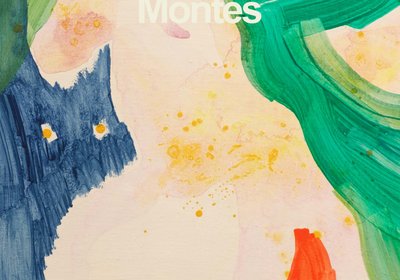
The Time of the Novel
Lara Mimosa Montes
Wendy's Subway, Apr 2025
I read Whiting award-winner Lara Mimosa Montes’s The Time of the Novel in one sitting. It is slim, less than 90 pages, true, but it is also propulsive because it’s so thought-provoking. Philosophical but still intimate, in broad strokes, this story is about a person who spends a summer attempting to exist solely as a narrator and “... to withdraw from the world and to become a word.”
Mimosa Montes is a writer’s writer. This book is very much about the theory and praxis of writing. It reminded me of Marguerite Duras mixed with Jean Baudrillard. I couldn’t stop thinking about a quiet Austrian novel from the 1930’s by Mela Hartwig called Am I a Redundant Human Being?, which contemplates identity and social constraints on personal value. Both works contemplate suffering’s utility. This book is also reminiscent of Andrei Tarkovsky’s Sculpting in Time, the personal philosophies of art-making by a master. Tarkovsky and Mimosa Montes are both artists who insist their medium isn’t poetry, while explaining that it isn’t poetry in verse.
This section really exemplifies the heart of this book:
“I attempted the following exercises in order to become a narrator:
MONDAYS: I practice eavesdropping (“secret listening”).
TUESDAYS: I write in the first person and dream in the third.
WEDNESDAYS: I trace from memory the trajectory of the sun.
THURSDAYS: I rotate the plants and wind back the clocks.
FRIDAYS: I practice perceiving the world without words.
SATURDAYS: To begin, I strike a match at dawn.
SUNDAYS: I close my eyes and type in the dark.”
It is poem, it is personal, it is practice. A ritual of writing that is both real and existing in the magic realm of imagination. The time of the novel is distinct but still derived from the time of our many selves.
It was refreshing to live in a world that questioned what the author calls the ‘Real’, and a world that revelled in its intellect as the author explores new ways to experience the world. It was refreshing to read a book that loudly embraces the importance of art and beauty, without making it seem trite. As Mimosa Montes says, “To be a narrator was to disappear myself in service of some higher calling—art…” The art and the beauty are paramount; it is what sustains all narrators, all narratives. While this ‘narrative’ does not follow a traditional arc, it finds different abstract footholds. It meanders through observations and feelings like a philosophical text. Or like a diary. It might feel rudderless at points but the rudder, the narrative, is there all along. Mimosa Montes likes to live on “this liminal plane where [she] reflect[s] not on the novel, but the free associative microflows that when experienced together might, over time, begin to resemble narrative.” And, I won’t ruin it, but the ending is exquisitely beautiful.
I think many writers will relate to the question The Time of the Novel poses: how to make a piece of art, something beautiful, that speaks so clearly to other art but also opens up new ways of seeing? Mimosa Montes seems to know. Her work tells us it might be to live as pure language, to understand how our most internal mental and sensory processes shape everything into something Real.
“We walked down a long staircase, and that was it. And then it ended.”

Jesi Bender is an artist from Upstate New York. She is the author of the novels Rhododendron (forthcoming 2027), Child of Light, and The Book of the Last Word; the plays Crux and Kinderkrankenhaus; and the poetry collection Dangerous Women. Her shorter writing has appeared in FENCE, Denver Quarterly, Sleepingfish, and others. www.jesibender.com