The Beauty of Matter
Christopher Bernard
Bowker, Dec 2025
Christopher Bernard mailed me a copy of his poetry book The Beauty of Matter with a note enclosed. In it, he wrote to me that he was glad to be sending his book to Vancouver because it was a city full of memories with his late partner, one of the book’s dedicatees. I received the book in my Vancouver apartment and looked at the mailer’s address: San Francisco. Little did Bernard know, I have many fond memories in the city from which he wrote to me. I sat in my Canadian West Coast windy city and thought of the American West Coast sea breeze, floating up past the elephant seals tanning themselves in front of the San Francisco ferry building. Tinged with nostalgia, hope, and reflective presence, I began to read.
Bernard’s poems are about death, which is to say, they are about life. Bernard writes about death from the attached-ness of the living. Over the course of the book, views on death change, or many options are suggested for how death presents itself to us. In an early poem, Bernard writes that “death is not only tragic; it is tactless”. Death doesn’t knock, it sweeps in and Irish exits. This sentiment is echoed in a later poem wherein the speaker states simply that “people should not die”. The plainness of this statement makes it strike harder than the ruminations on death that have come before it; it is the ultimate normative statement on dying. It is also a question, a call to whether the tragedy of death is some Being making a mistake; the crux of the poem is that we cry at artists destroying their creations and yet God lets us all die.
While he writes explicitly about the unfairness of death, Bernard also offers ways that death might come to us sweetly. In the fifth poem of the book’s collection “Six Poems for Polly,” Bernard writes of childhood dogs visiting Polly at her deathbed and beckoning her to join them. Although at first she resists, she finally agrees and joins them in the next realm. “The Dogs Have Come” is the poem’s title, suggesting that perhaps there is a horizon at which those we’ve lost collect us, our own personal Virgil guiding us through to the next place. In a poem not much later in the collection, a speaker recites the mantra “death has no terror death has no terror death has no terror”. The repetition is at once a recognition and a rejection of the fear of death, as well as a subtler acknowledgment that human things like terror do not follow us into the beyond.
Indeed, in several pieces Bernard touches on the inaccessibility between the realms of life and death. Mourning is described by Bernard as a practice that can only go so far: “a friend dies. You sing a drunken song for him, / then let him sleep in memory’s secret hotel”. While the disappeared are not gone, they do not manifest in our lives the same way. Palimpsests may follow us, but they are imprints of something sunk now in the deep swells of memory. Part of death’s inaccessibility is illustrated in the way we try to approach it. Saying goodbye to a dead loved one, Bernard’s speaker says “see you later, after the curtain, in the green room. We'll / have a laugh”. To make sense of dying, we incorporate it. We bring it into the realm of living bodies we can understand. If life is a stage, death must be just beyond the curtain; we cannot conceptualize it beyond our symbolic realm.
I attribute death’s constant presence in the pages of Bernard’s book to the fact that life is inescapable. Even death we access through life. Bernard shows us that life is loud and overflowing; he writes about “all of it, opalescent, azure, stone, cloud, ephemeral / forever”. Vignettes of darkness do not preclude life. In his poems, Bernard attends to all five senses and imbues a sixth: the poetic sense, a visceral presence. Poetry is in some way memoria; the poetic sense keeps life close and allows it to go on and go on. Words that taste sparkling alone on the tongue are combined in ways I’d never read, never heard, never yet played with in my mouth. In the poem “October,” a speaker describes processes of “browning, oranging, reddening”. Browning connotes rotting fruit, reddening connotes fury, and oranging is playing along, new. Life is inescapable, and it is also inexhaustible. Terminus in the case of human life does not mean we have run out of all that can be. In life, we have ample space but limited time. Bernard plays with the borders between these two elements, writing time as place when he describes one “smiling as in the strange country called youth”. It seems that time escapes us and death catches up to us, but laughter, fruit, and a smile; these things last in whichever time-country we are.
One of the ways Bernard shows the vibrancy of life is through the possibility that permeates childhood. In Sombre y Sol, the speaker, a child, changes his mind about the nature of bullfights after watching them consistently with family. From an impressionable vantage point, the child is able to apprehend something and allow it to take on new meaning. In Footprints in the Sand, the speaker imagines what might go on in a little girl’s head as she stands on the beach. “How far does the horizon go / beyond the edge of the sea? / There, there I’ll go!” the speaker muses. Writing from both within a child’s mind and within the thoughts of an observer, Bernard notes the way childlike presence and thoughtfulness can spin life’s daily elements into new prospects. In a poem called “The Future,” Bernard reminisces in first person, calling the whirlwind of younger years into relief. For Bernard, youth is not something locked to a specific time but something that brightens a person’s lens and can be evoked regardless of age.
If one of the primary forces in Bernard’s poems is time, another is nature. The fleeting life cycle of flowers, the elusive moon, and the salty wind follow speakers through the poems. The final poem in The Beauty of Matter is called “Windward”, which sounds just right for a West Coast writer. The figure in “Windward” is some kind of god, a being that rises out of the ocean and is a hand whose fingers are covered in birds and a smile that is stone and foam, a presence that seems to transform with the speed of the roiling sea. Among the different views offered throughout the poetry collection on death, salvation, and meaning, this last nature figure seems to tell the reader that faith itself is more important than in what we have faith. Faith in life can boil down to a commitment to make meaning. Bernard offers us the perfect picture of meaning-making in his poem “Monk’s Cell.” In the dull cell, the candle becomes the monk’s lover, the darkness his cat, the sun and moon apples in the great fruit bowl of the sky; life, shining, spins itself out of the cell’s dark loom. Bernard twists the fantastical into the mundane, playing with the human capacity to fashion marvels out of our given life. Faith, then, might just be that: to overflow with life, witnessing its miracle in any time-country.
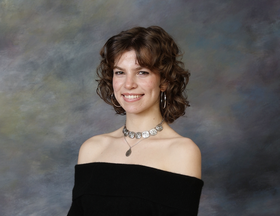
Isabelle Whittall graduated from a Bachelor of Arts in Philosophy and Political Science at the University of British Columbia (UBC), and is pursuing a Master of Journalism at UBC. She co-hosts the radio show Hail! Discordia! on CiTR 101.9fm, and is Editor-in-Chief of UBC’s Journal of Philosophical Enquiries. Her work has been published in Discorder Magazine and The Sundress Blog by Sundress Publications.