“I called to him, rapidly stating what it was I wanted him to do—namely, to examine a small paper with me. Imagine my surprise, nay, my consternation, when, without moving from his privacy, Bartleby, in a singularly mild, firm voice, replied, ‘I would prefer not to.’”
—Herman Melville, “Bartleby the Scrivener”
From the time of his disappearance, it was tempting to conclude that Mark was a pandemic casualty; the question was, which one out of the appalling quartet had whisked my copywriter away? There was the first pandemic, the virus itself; the second, racism; the third, misinformation; the fourth, resignation. The interminable months of mass illness and remote work had ended. But no sooner had we commenced our long-awaited return to the quarters where my small marketing firm makes its home, than I found myself embarking on a journey to find Mark. In the murky contours of our new world, it did not seem implausible that I might locate him by becoming him—by applying my dusty theatrical skills to gain a view of his psyche. The process would be like holding a séance for my father in order to step into the shoes of Hamlet. I would trace his journey, consume his snack of choice, and attempt his task of writing the LifeSolved narrative, which in any case I would have to undertake in his absence. I hoped to escape the day’s unsettling start and move towards coherence. But I am getting ahead of myself.
As I approached the office yesterday morning, a late-summer Wednesday, I anticipated with satisfaction the sight of Mark’s upright pose, steady typing, and attentive if otherworldly gaze. Six months ago at his own request, he had returned to the office alone, the better to focus on his copywriting. But yesterday when I arrived, I found his cubicle jarringly empty. After two hours, having phoned and emailed him to no avail, I undertook an examination of his desk and drawers. These contained legal pads, ballpoint pens, and at least two dozen packets of chocolate-covered espresso beans, but no obvious clue to his whereabouts.
Finally, I summoned Shauna and Ronald to my office, which still bore the haunting remains of seventeen months before. Amidst the abandoned mug with its cracked crust of evaporated coffee, the curled and fallen sticky notes, the dish of stale caramels, I held forth on the irreplaceable copywriter’s absence—the latest rent in the fabric of our world. I am an imaginative man, whose roots in the theater gave me an auspicious foundation for dream-selling and storytelling, but perhaps not the fortitude for an era of calamity after calamity.
“Could he have fallen to the first pandemic? Perhaps, though he is almost never out sick,” I mused to Shauna and Ronald. “As for the second pandemic, racism, which ought rightly to be numbered the first, I suppose a street protest could have delayed Mark’s arrival. I struggle to envisage him shouting with a placard; still, I cannot believe he would walk past a justice-seeking throng unaffected. He would join in their ranks soundlessly, I think, but my own commute did not indicate there were any ranks to join today.” Here I turned for confirmation to my laptop screen and scanned the latest headlines of our city, a considerable yet overlooked hub of the American Northeast.
“Misinformation one can definitely rule out,” I continued. “Mark is far too intelligent to be drawn into a conspiracy theory. And resignation—I suppose one must face the possibility that he has, like the inexplicable many we hear of in the news, found he prefers not to return to the office. But it is unthinkable that such a model of conscientiousness as Mark would not give proper notice. So, there, we’ve exhausted the four pandemics at least.” Not having spoken so many words before from within the confines of an industrial-grade mask, I paused for air and reached, inadvertently, for my crusted mug. Having found the office coffee machine unwilling to start, I longed for a fresh cup.
Shauna shook her head and brushed a curl out of her eyes, which shone with superior knowledge above her satin face-covering. “We’re up to eight,” she stated in a peremptory tone that I have never particularly enjoyed. She is, was, the ethereal Mark’s more earthly colleague, a pragmatic, if trend-obsessed, account manager.
“Eight pandemics?” I asked.
“Last time I checked. Fifth is mental health issues.”
“Isn’t that a secondary effect rather than a pandemic proper?”
“Not according to the think-pieces.”
“By that term, I assume you mean those treatises which are dedicated to the very opposite of thought—the exploitation of false and stale dichotomies, in service of provocative headlines.”
“I guess you could put it that way.”
“Mark, I believe, is possessed of an unusually sturdy mind, one which can generate copy of an enormous variety. One has only to think of the rhapsodies he composed for Rare Health or the poetic heights he reached for Savage Law. And in the absence of a functional coffee maker, he devised this brilliant solution to keep his mind stimulated.” I picked up a packet of the chocolate espresso beans that I had brought to my desk, tore it open, and risked peeling back an edge of my mask for a taste.
“Sixth is termination of constitutional rights.”
“Good Lord, I suppose it is reaching that point.” I strove to fathom what judicial or legislative act might have inhibited the copywriter’s arrival, but too many of his demographics remained, alas, unknown to me. “Would that really prevent his attendance today?”
“Hard to say. Seventh is gun massacre.”
“I dearly hope it isn’t that. But we would know,” I said, scanning the headlines again. “There would be a mosaic of good, kind, unsuspecting faces on the front page of everything.”
“Eighth is jalapeño ice cream.”
“In what sense?” I asked, full of apprehension. “Poisoning it? Smashing it in your neighbor’s face?”
“Making it from scratch.”
“Well, that’s all right, then. Although not very tempting,” I said, my shoulders lowering, my breath easing. “But I don’t think that prevented Mark’s arrival. I’ve never known him to indulge in any type of dessert.” I picked up the bean packet and scanned the nutritional facts. “I don’t think this counts; it’s more of a delicious but fibrous energy boost.”
Here Ronald cut in with typical dryness. “This is all fascinating, but are we sure he isn’t working from home?” Among Ronald’s several hats are, were, that of human resources manager, although “human” is not the first word he brings to mind.
“Work from home on the very day of our return to the office, after he returned alone early six months ago?” I demanded, irked by Ronald’s tone, by his uncovered face, by the notable lack of anything resembling humane concern in these, the two staff upon whom I most relied aside from Mark. “Work from home without denoting it on the spreadsheet, according to the new protocol I described in my email of yesterday?”
“What email?” Shauna asked.
I opened my sent box, only to see nothing of the kind stamped for the previous day. Yet I was certain I had arranged the words while typing at my kitchen table and gazing out the window at the wall of my neighbor’s blue house. Now, still searching my sent box, I consumed more of Mark’s beans as my thoughts quickened. Could it be that I had composed the message solely in my mind while rinsing dishes and resting my eyes on my neighbor’s blue edifice? With prolonged solitude, the difference between thinking and writing had thinned, like so much else in our world.
“Never mind,” I said. “Come see his space for yourself.” I led Shauna and Ronald out my door and a few steps across the carpet to Mark’s corner of the cubicle grid. The desk was empty of his laptop, with cords and monitor remaining. “Does this sight not fill your souls with dread?”
“I mean, this does,” Shauna said, lifting a square pillow from under the desk. “Probably a good hiding place for mice.” This was something I had missed before. Could the copywriter have napped on the floor?
“Have to wonder how much of the workday he spent reading,” said Ronald, his head behind a cupboard door. I opened the other side to see a startling array of texts—sociopolitical, philosophical, spiritual. The pillow now began to take on the aspect of a meditation cushion.
“Such a complex, enigmatic lad,” I mused.
“Such a man-crush you have,” Shauna wisecracked.
“Shauna! You may return to your desk.”
“Do you want me to check his emergency contacts?” Ronald asked with a shrug.
“Please do,” I replied, extracting several volumes and returning to my desk. There I paged through the books and finished off the bean packet, wondering at the motive for Mark’s absence. Emboldened by the instability that immersed us all, had he embarked upon a philosophical experiment in free will, simply abandoning the duties at which he so excelled? Had he sought a spiritual path of abstaining from our worldly ways, or even suffering for our sins? Or had the scales fallen from his eyes in regard to our business, inciting him to protest the means of production and even myself as a supposed champion of the market? I set aside a thin study of the American robin that seemed irrelevant to the other tomes. A call to my cell phone from a client, the creator of the LifeSolved water bottle, interrupted my reverie.
“I thought I’d reach out about the status of the narrative,” said that eager fellow. Everything we had once prepared about the bottle and its suitability for a multifaceted daily routine had been rendered irrelevant overnight by the first pandemic. At last, having postponed the product’s launch for more than a year, Mark and I had begun the task of repositioning the vessel for the new world.
“Have you generated any new content?” the fellow pressed.
“We find ourselves in a difficult spot. Our copywriter has vanished.”
“That’s terrible. Is there anything you can do?”
“We are considering a number of theories.”
“And in terms of the content?”
“Progress will be made.”
I set down my phone to see Ronald at my door, bearing an expression one might almost describe as chastened.
“The only number he gave was for his landlord. She says he moved out six months ago.”
I rose from my seat. “But that’s when he came back to the office! Did he not provide you with a new address?”
Ronald shook his head. My triumph over him was nullified by my horror at picturing Mark indeed asleep on the office floor, night after night. “He must have suffered some sort of crisis—financial, existential . . .” I mused.
“He was living here rent-free!” Shauna’s face popped up behind Ronald’s shoulder like that of a malign woodland sprite. “He was playing you.” For the first time that day, she seemed pleased.
Ronald spoke at last with gravity. “I could call the police.”
“Please do.”
When the two had departed, Gabriela, our much-tattooed designer, appeared at my door in their place.
“Did Mark say anything to you—about today, about the LifeSolved launch?” I asked.
“Not aside from the email he sent us. I guess they’re locations for the photo shoots.”
“Us?”
“I’ll forward it to you.”
Gabriela made a few strokes on her phone, and soon I examined on my laptop a message Mark had sent on Thursday, now six days ago.
“How did I miss this?” I asked in dismay. Devoid of a subject line, it contained only a list of three addresses in the rural counties to the north. I recalled my last conversation with Mark, in which I had explained my concept for the LifeSolved launch. Suddenly I believed I understood. “This could be his itinerary!” I exclaimed.
“For what?”
“For writing the narrative. It would be just his sort of brilliant stroke to seek inspiration in three dimensions.”
“I guess. But I actually came to tell you some news,” she said, her face blossoming into a smile. “I’m giving notice. I’ve decided to make a shift into event planning.”
“And why would you do that?”
“The ninth pandemic. Weddings.”
“Isn’t that more of a large-scale whim than a pandemic?”
“Maybe, but it got me thinking.”
“I see.”
Soon after, I drove out of the city in the early-afternoon heat. Into the new world I had minimally ventured, but I did so now with urgency, having notified those individuals likely to note my absence—namely, my employees. The police did not know Mark—nay, they did not know human nature—as I did. I would find Mark by becoming him, by intuiting his state of mind. It would be like jousting at a wind farm to inhabit Don Quixote.
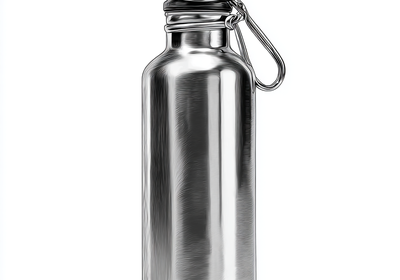
Into my briefcase I had packed my laptop along with three books of Mark’s, two of his legal pads, and a handful of his pens. For additional storage I had turned to my LifeSolved bottle, that tall glass tumbler encased in polyester mesh and topped with a steel cap. Beside me in my cupholder, it held several of Mark’s chocolate espresso bean packets. Next to it stood at last a hot coffee. On the drive out, I had been foiled by two shops bearing strange hours on handwritten signs before I at last secured a large cup. This new world, it seemed, simultaneously required more caffeine than the old and made the stuff more difficult to obtain. I had drained the cup by the time I arrived at my destination—a smallish waterfall located at the first address of Mark’s.
There was no sign of him as I stood before the churning water. I recalled our last conversation, in which I had explained my concept for the LifeSolved launch. For months, the sight of Mark onscreen in the office, again a fixture of the space with green cubicle wall behind him, had buoyed me and even stirred pride in my heart that the young fellow possessed such faith in our eventual return. There he had sat, a beacon of stability, ready, willing, and able to carry on in the face of so much that troubled the soul while I remained undesirous of leaving my home, and not prevented by mere contagion. Even a walk through the neighborhood immersed one in the sense that nothing was as before—neighbors gave each other wide berths on sidewalks, stray masks decayed at the roadside, and lawn signs spelled out what ought to have been shared assumptions about humanity.
But as I sat with my laptop at my kitchen table, I was steadied by the sight of Mark—poised and calm in suit and tie, clean-shaven and combed like a news anchor. Beyond the laptop screen, I could see my neighbor’s blue abode through the kitchen window, and at times the pattern of shadows and sun through the branches of a nearby tree created an effect not unlike that of rippling water.
“We shall feature the bottle in beautiful aquatic locations—lakes, streams, ponds,” I said to Mark in that last conversation.
“Is the bottle meant to bring water to water?” asked Mark, always astute.
“No, but that is not the point. We must create pure visual peace, something that people will love to rest their eyes upon.”
“Perhaps they will love to rest their eyes upon the photos so much that there will be no need of copy?” he remarked. From time to time, it is true, Mark could be a bit contrary.
“Indeed not,” I answered. “The copy must match the photos in beauty, and for that, Mark, you must produce something extraordinary, as you always do. How is it coming along?”
“At this time, the copy is a challenge.”
“But it is one to which you will rise.”
Now I gazed at the waterfall and the creek below it. Surely Mark had traveled here to soak up inspiration. I settled myself onto a large rock, opened my briefcase and laptop, and munched a coated espresso bean. I strove to apply my attention to the tumbling current, that it might reveal to me Mark’s thoughts. But my attention was soon drawn to a vacant restaurant that faced out onto the water. The converted Victorian abode stood silent, paint peeling, with a dirtied, empty white tent affixed to its side. All about, dead leaves that had been globally warmed too early stuck in patches of mud. Setting aside my laptop, I approached the structures and peered inside, only to shudder and back away from the bare, deadened spaces.
I returned to the rock and began uneasily to type. In that house, the heartening notes of silverware and chatter would sound no more; the aromas of sustenance would never again rise. Had Mark, too, found that the place darkened his mood? I added haltingly to the document.
My phone rang, and in hope I pulled the device from my breast pocket. The caller was the LifeSolved creator. Reluctantly I answered.
“Just thought I’d check back in about the narrative,” said that conscientious young man.
“It is underway.”
“It’s just that our team feels our product is more critical to the world at this second, than we imagined even this morning.”
“How so?”
“Consumers are facing a future in which the workplace might not exist, democracy might not exist, the planet might not exist.”
“And the bottle will help how?”
“You’ve got to stay hydrated, no matter what lies ahead.”
“Ah.”
Having concluded the call, I opened Mark’s list again on my phone. Soon I was on the road again, to the park indicated by his second address.
Another hour’s drive later, I stopped at the park, which sat near a tranquil river dotted with fowl. I scanned left and right for the copywriter and downed more espresso beans. Then I broadened my search, traversing the river’s edge. Briefcase in hand, I searched the bank in the beating sun as ducks and geese squawked and an occasional vehicle rattled over a bridge. At least this place was not quite so deserted as the last.
I found myself approaching a barnlike structure. Curious, I rounded the building and saw with joy that the word “PLAYHOUSE” appeared at the front. Perhaps Mark was within, commiserating with a friendly troupe of thespians.
But as I walked further, I saw a banner bearing a sad command: “Join us on the virtual stage.” I tried the front doors, but they were locked, and no sound issued from within. I sank to the porch. Here the footlights shone no more; here kind souls no longer gathered to bring to life that glorious thing, a play. And yet something must be written. Shauna, Ronald, and the handful of others who still relied on my small firm for a paycheck and an office roof over their heads must not be disappointed.
I rallied myself to open my laptop and type, hoping my scant inspiration might still bring me, in the end, to Mark. Indeed, after a few minutes, it occurred to me that since his disappearance I had not messaged him via the chat of our videoconferencing platform, although I had emailed, called, and texted to no avail. I reached for my phone, and now the words came easily.
Where are you???
I am unable to say
So instantaneously came Mark’s simple, profound response! I leapt to my feet, and my laptop clattered to the porch. “Of course, in these times, which one of us can say with confidence where he is?” I nearly laughed in recognition.
Are you seeking inspiration for the LifeSolved narrative at the beach indicated by your third address?
Yes
I gathered my things and fairly ran back down the path, the bank, and up the slope to my sedan.
Will you wait for me there?
I am unable to say
The pithy phrase had a less satisfying ring on its second occurrence, but there was no time to lose. I returned to the road.
My mind raced as I drove east for two hours, the sun haunting my mirrors. When pangs of hunger grew to a roar, I made my way to a drive-through window. All the way, I turned Mark’s phrase of choice over and over in my mind. He was unable to say—to write, to speak, to express?
Past six o’clock I arrived at the beach and parked at what seemed the midpoint of an Ocean Avenue. I ventured up a set of stairs over a dune to a boardwalk, and the quiet clapboard neighborhood gave way to the pounding, seemingly infinite waves, with vast stretches of aqua and blue pinkening into dusk. The place was not entirely deserted; here and there a soul or two strolled by or marked the expanse of sand in the distance, playing catch with a galloping dog. Again, there was no sign of Mark.
Are you still at the beach?
Yes
Where, Mark, where???
I am unable to say
I fear it was not a mere search for inspiration that drew you away. Are you disillusioned??? Are you ill???
Yes
Was your departure occasioned by the fifth pandemic, the inhumanity of man to man, sheer unadulterated will, the capitalist state, or . . . ???
I am unable to say
“Of course, one can scarcely differentiate the effects of these forces on one’s psyche, only feel their collective weight,” I pondered. “And yet one must try.”
Was it the relative innocuousness of the LifeSolved client which made you reflect upon the distastefulness of our medical and legal accounts???
Yes
This was heavy stuff indeed. And yet, had I not experienced the same sentiments myself, as they brewed a kind of dread just beneath the surface of my awareness, for goodness knew how long?
I sank to a boardwalk bench facing the sea. Indeed, health was rare and law was savage in our land, and what did I do but aid and abet the situation? I listened to the waves for a time, and at last determined to raise Mark’s spirits.
You know from my email of March of this year how I value you.
Yes
Aha! Much remained unspoken between Mark and myself, but at least I could hold fast to the knowledge that the essential words had been shared in my message of gratitude, composed upon the one-year anniversary of the first pandemic.
Will you or will you not return to the office?
I am unable to say
And there it was, what seemed the final blow.
I wandered the boardwalk in a daze until sunset, never encountering a sign of Mark. The inert streets, the mournful waves, gave rise in me to a peculiar yearning—I could only put it to myself that I wished for a successor of sorts, someone to carry on the best of my knowledge into the great unknown ahead.
As darkness fell, I conceded there was nothing to do until dawn but weave the words for LifeSolved. As I retraced my steps on the boardwalk, Shauna called.
“Our incomparable colleague has emerged, only to make himself a riddle again!” I bewailed.
“You actually found Mark with the addresses in that email?”
“Not exactly, but he sends me clues via chat, which as yet have not yielded his whereabouts.”
“Clues?”
“Repetitive messages which alternate between affirmation and diffidence.”
“That sounds like he set up a bot. He’s still playing you.”
“Nonsense! His brilliant missives connote a soul deeply rattled by the age.”
“Because that’s how you’re feeling. I say he lived in the office rent-free until he finally saved enough to go write his birdwatching guide.”
“His what?”
“That’s what he always said he wanted to do. You don’t have your coffee maker, and you don’t have Mark, and you never expected either situation. So you’ve idealized him into some better version of yourself that doesn’t exist. He’s just a clever weirdo.”
“Shauna, why did you call?”
“It’s time for me to move on.”
“In what way?”
“As a senior account manager at another firm. For another firm. The job is virtual.”
“Shauna!” I bellowed. “It is right and good, it is civilized and humane, to show up in three dimensions at an office and work side by side with your fellow beings. How could you leave in the midst of such a strain, and of nonuple pandemics?”
“Decuple.”
“What?”
“We’re up to ten. Because of the asteroids that are probably too small to do damage.”
“Probably?”
“Probably.”
“And this inspired your departure how?”
“It didn’t. I just wanted more money.”
Fueled by the remainder of the espresso beans, I sat in the backseat of my vehicle and somehow rallied myself to compose. Occasionally outlining my thoughts with a pen and pad of Mark’s and skimming his volumes, I typed for hours, existing in a fog of language in which hollow think-pieces, anxious lawn signs, phantom emails, cryptic chats, and errant robins seemed to taunt me at every turn. Near dawn, I sent the document to LifeSolved and succumbed to sleep on the auto upholstery, in scarcely more comfort than Mark on the office floor.
I awoke at mid-morning, groggy and damp, to a call from LifeSolved.
“We’ve been reviewing your narrative, and there are some tweaks we’d like to recommend. It’s far too dark. See, what this is really about is, how do we prepare for a future in which there is no future? So it’s exciting.”
“Ah. I admit I’d not quite grasped the joy of the situation,” I said. “The truth is, we have one way or another lost the one who always wove something exciting from what was dull or dreadful—until this project challenged him to soar out to the very limits of language, and having done so, he was unable to produce another word.”
“Dull or dreadful?”
“I must go.”
Exhausted, hopeless of retrieving Mark, I nonetheless set about to send him my email of March again, that it might provide him some solace. I stepped out of my car and sat with my phone on the curb in the fresh sea air. But search as I might, I could not find the message, though I could recite its words of comradeship and appreciation from memory. Ronald called, and I answered.
“I have some news,” he said.
“Let me guess. You’re leaving to start a nightclub because of the eleventh pandemic, dancing the night away.”
“No. We’ve found the security footage of Mark. He was last seen leaving the building on Thursday night.”
“Nearly a week before we returned?”
“Yes.”
“Is there anything of note in the footage?”
“I’ll just send it to you. Also, I am leaving—to start a hardware store because of the eleventh pandemic, DIY meat lockers.”
“All right,” I replied. “Why not?”
I examined my calendar of Thursday, now a full week ago, in search of a clue, and began to wonder why Mark had not mentioned his list of addresses during our weekly one-on-one meeting that afternoon. It was then that the worst revelation of the past twenty-four hours hit me.
I rose to my feet and wailed, pounding my fists into the roof of my sedan, careless of the distant passersby, as the hideous knowledge hatched in my mind. Shall I own it?
It is simple: I missed the meeting because I believed myself to be attending it. I must in fact have held a version of the meeting in my mind while—yes—rinsing dishes and gazing at my neighbor’s blue wall. I gripped my phone and typed, almost too despondent to care whether it be to human or to bot that I cried out.
It was not the limits of language, but the limits of myself that drove you away???
Yes
Will you accept my deepest apologies???
I am unable to say
I hope you will.
Yes
I dearly hope you will.
I am unable to say
Sweat-soaked, hungry, and weary, I began to fear that I would not endure the strain of viewing the security footage from Ronald. I would take refuge somewhere first. I gathered my things and walked towards the center of town, hopeful that daytime had brought some life to streets deserted in the evening.
At last, like a mirage, the glass door of a shop glinted in the distance as it opened and closed with arriving and departing customers. As I ventured closer, I read the sign above the door: “Copy, Print, and Mail.” Ah, what words could better convey the stability of the old world? Then I saw affixed to the window in handwriting a comforting adaptation to the new age: “Work from here—wifi, coffee, and sandwiches now available.”
Within I found a sort of makeshift café of folding chairs and card tables in an aisle, where a half dozen visitors worked on their laptops and ate. The remaining aisles contained office supplies for sale, and around the perimeter customers waited in line at a mailing desk or hovered around the humming copy-and-print machinery as pages cranked out into neat stacks. The scents of coffee, egg, and ink mixed in the air.
A headache had come upon me, but I settled at one of the tables, opened my laptop, and saw the new message from Ronald. After a deep breath, I played the surveillance video—a ghostly, black-and-white rendering of the sidewalk outside our office building. Tidy, poised young Mark emerged from the door, at first a miraculously usual sight. His unremarkable professional attire and briefcase were the same as always. Yet a few details began to catch the eye: the candle he held before him in one hand, almost in the pose of a choir boy; the steady gaze that seemed to rest just above the flame at some point in the distance; and the slow, purposeful stride with which he moved across the camera’s eye. The footage ended.
Seized with I knew not what emotion, I rushed to the front of the room and found myself replaying the footage and blabbering at the wizened man who stood behind the mailing desk.
“Have you seen this extraordinary and undervalued lad, who toiled so seamlessly that he became like a part of my own psyche?” I asked, holding my laptop forward. “He is my son.” My listener, whom I now know to be Ed, owner of the inventive shop, looked at me in puzzlement.
“He is the closest thing that I shall ever have to a son, and he has renounced everything, because of everything—but especially because of me—and embarked on a vigil of one, with a signally singular expression on his face. Do you not see the candle in his hand?”
“That’s not a lighter?”
“Indeed not! Mark is far too sensible a soul to smoke. He is gone, and the center is gone—of my work, of my existence. I know not how long it has been absent.”
I will always be grateful that Ed chose in that moment to take a humane view of my outburst.
“I don’t think he’s here,” he offered. “But you look like you could use a rest. And a snack.” He led me back to my table and, seeing the LifeSolved bottle, emptied it of espresso wrappers and took it away. He returned it to me filled with water and took my order for a sandwich. As I waited and sipped, a clock on the wall gripped my attention—it was time again for my weekly meeting with Mark! I moved my table to an empty aisle, where Ed was kind enough to bring my food.
And so, taking a bite from time to time, I record my tale, sitting as Mark sat a week ago—in a virtual meeting of one. He would have faced himself on his screen, longing for the rectangle that contained him to split in two, for a familiar face to materialize and accompany him. But seconds turned to minutes, minutes ticked by, and he remained alone on the screen with the same solitary sentence above his face that appears above mine now: “You are the only one here.” And did not that bleak test of the spirit, in one way or another, cause him to seek a candle and depart?
Shall I send him the recording of my tale? If he were here beside me, would he take heart in the fellowship of this place, in the solidification of text as pages roll out? Or would the machinery bring to his mind that calamity which is more of a sad fact of human nature than a pandemic—in which man takes man for granted, even treats him as a machine, until it is too late?
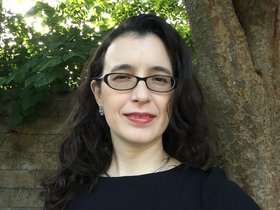
Juliana Rosati is a communications professional living near Philadelphia, Pennsylvania. Her short fiction was published in Ruminate Magazine as a finalist for the 2022 William Van Dyke Short Story Prize and is forthcoming in Fjords Review online. She is a member of the Open Book Writers Group and participates in Rosemont College writing retreats. She graduated from Bryn Mawr College with a major in comparative literature and a minor in creative writing.