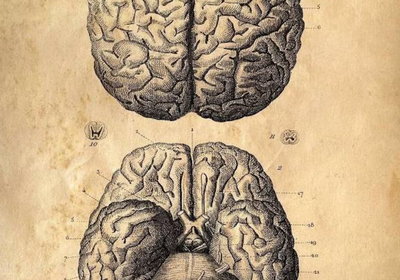
The domain of empirical matters of fact and the domain of logical and mathematical calculus had suffered no great blows throughout the seventeenth and eighteenth centuries. It was only with the arrival of the nineteenth century and its technological exacerbations (e.g., photography) and theoretical disruptions (e.g., non-Euclidian geometries) that both domains revealed an underlying element of arbitrariness. Amid the turmoil, far from undergoing a metamorphosis, the scientific spirit accentuated its peculiarities, some of which James delineated well in characterizing the tough-minded empiricist: sensationalism, materialism, irreligiosity, skepticism. All traces of arbitrariness were, on the whole, proof that the foothold of mind in nature was precarious, in greater need of vigilance than previously suspected. The twentieth century provided a further thrust in this direction—the multivalent Kepler becomes the monovalent Hubble. But we should not rush our judgment of this phenomenon. The same form of the spirit is at work. In his lifelong investigation of the brain, Gabro exemplifies the old devotion, the old ardor, and the old certainties.
Holton’s themata, the unquestioned presuppositions that shape the scientist’s theory-building, can lead us into the old certainties: a stable home, unyielding to the stridencies of history, a close-knit family of energic members, and the mortifications of a suboptimal physique sprung in Gabro’s psyche as redundancy, dynamism, and limits. From his early research on glial cells to his late interest in functional equipotentiality, this triune remained an obsession.
There was redundancy in Clemente and Marcela’s domestic arrangement. He was a renowned architect and amateur geologist; she, a labor rights activist and amateur musician. They lived in one of the wealthiest municipalities of Nuevo León. Their combined income guaranteed a continuous stream of nursemaids and tutors. What is more, the thirties were a decade of considerable prosperity thanks to the expansionary monetary policies of the Cárdenas administration: construction industries, in particular, received a remarkable stimulus. Indeed, the frenzy with public works set Clemente and Marcela’s family for life.
There was dynamism in the relationship among siblings. Montiano, the oldest, was exquisitely hypersensitive and attuned to the physical and spiritual tinctures of the surrounding world—his words, which were rarely less than an alluvion, conveyed a natural authority that other household members lacked. And yet Sima and Obsidiana, the youngest, found great delight in essaying campaigns against his prestige. Campaigns to which Gabro attached no value. He admired his oldest brother and resented the playful spirits that threw this admiration into perspective. But Gabro loved them. He suspected that a childhood without their bustle would have impoverished his sense of self, always frail.
There were limits in Gabro’s being-in-the-world. Yes, he admired Montiano and bemusedly tolerated Sima and Obsidiana, but there was an insurmountable distance between them and himself. To begin with, they were healthy, creaturely, unaware of the possibility of malfunction. In contrast, he was forced to intuit the mechanisms that oversaw his body to disrepair. Year after year, for weeks, for months, he was exiled to aseptic environments where his only resources were intellectual. One at a time, each of these exiles led him away, to an indescribable isolation.
Although it is common to underestimate the crises of youth, seeing in them a dim augury of future sufferings, we should not ignore that our disposition toward triumph and failure is here emotionally outlined. That is to say, we learn to recover, or we learn to excuse. Gabro felt the center of his being far from the surface that entered into contact with his fellows, but he refused the enticements of conceit. The abyss had to be traversed. To this end, he sought a passion—first in the arts, then in the sciences.
His was a crisis of isolation, however. He followed his older brother, who was then studying Modern Literature at the National Autonomous University of Mexico, for a year. To judge by the enthusiasm of the period, Gabro would seem an artist at heart. He took to painting, music, and poetry. And even indulged in a tempestuous affair with an older woman. Montiano offers a vivid reminiscence in their later correspondence:
You were infatuated with Schumann, with Turner, with Constant. All the wrong infatuations back then! (Authorized: Nancarrow, Malevich, Pound). You gave us hell and proved in every discussion that you were sincere (which to you has always meant being exhaust-ive/-ing). So much so that you caught Therese’s attention. She was suddenly a nineteenth-century Romantic (get this: she treated Aurélia like others treat Finnegans Wake). Then both of you were suddenly decadents tearing themselves apart. I suspected we weren’t witnessing a performance. Yeah, that demonic energy could come only from a man struggling to keep in touch with the world or from a poet. And, well, we know what you turned out to be.
A crisis of isolation, not of meaning. With notable exceptions, those who placate our hunger for histrionics in the arts are usually passers-by. The furor subsided, and so did most of the accompanying interests. Romanticism thawed into science.
In 1957 he entered the National School of Biological Sciences of the Polytechnic National Institute. Unlike many of his peers, Gabro already had a clear idea of a desirable trajectory: through the cell toward the brain. An eminently theoretical trajectory. Anatomy, biochemistry, histology, and physiology contributed to the nascent ardor. It was a marvelous time to feel exhilaration: Spanish exiles such as Bonet, Bolívar, and Costero were unusually serious about science as a calling and could live up to the demands of the most exacting student. Gabro, at last, found isolation energizing. The old ardor.
He acquired a robust technical background that facilitated his incorporation in 1961 to the department of Biological Sciences and Health of the brand-new Center for Research and Advanced Studies. This year inaugurated a decade of investigation focused on glial cells, which would yield three prescient, controversial articles: “Comparative structure of neuroglia in the spinal cord of turtles and rabbits” (1964), “Glycogen distribution in astrocytes” (1968), and “Astrocytes: indicators of possible chemical excitability” (1970). Prescient, because at the time glial cells were generally regarded as supportive of neurons, a modest step from the view that they were little more than a form of connective tissue—Gabro ultimately proposed that there lay hidden within astrocytes some sort of nonelectrical excitability that allowed signaling functions as important as those of the neuron. Controversial, because the lack of funding for his type of research forced an early break (1964) with the prestigious CINVESTAV and recast him as a maverick—his 1968 and 1970 articles were published in relatively obscure Latin American journals, which had no qualms printing statements such as the following:
The “neuron doctrine” has set perceptual and methodological constraints that have proved of immense value in the study of the brain. We understand much more about its structure and workings, and, accordingly, have refined our intuitions. What do they tell us? That to account for the increasing dynamism of the processes of the brain requires a rearrangement of hierarchies, or perhaps their suspension altogether, at least until we devise another fertile system of constraints. It is predictably dizzying to find ourselves again in the field of possibilities. Our discipline is still young, but even youth can embrace stasis, especially in a triumphant mood. I encourage my colleagues to look anew, to look askance. We must tax perception in order to imagine the techniques that will relieve it.
He was able to continue his research thanks to the intervention of two colleagues and his father. In his years as a student, Gabro befriended Luis Arco and Antonio Espíndola, two capable graduates who would go on to join for a season Geschwind and Kaplan’s team of aphasia specialists at the Boston VA Hospital. All three had entertained the idea of an institute dedicated to daring research in the line of Galambos’s and Kuffler’s glial cell work, but it was only with the news of Gabro’s desertion that a sense of urgency compelled them to organize. Luis and Antonio reached out to well-heeled acquaintances and sold their idea mainly through the jangling of credentials. Gabro put the case to his father in more personal terms: this was an opportunity to lead, to stake out new territory as Clemente himself had done, and it was perhaps also an opportunity to settle at last. Hokum for the greater good, more or less. The Ochoterena Institute for Advanced Research (CIAO) was formed in 1966.
The makeshift years of 1964 and 1965 warranted the old devotion. Banished from the laboratory, pressured into complex negotiations, Gabro had to subject himself to the psychic estrangement that pervades nonutilitarian programs in profit-seeking societies. He was the man who inquired and the man who fast-talked. Gabro managed, and the experience simply accentuated his aversions and his dichotomies. In a letter to Montiano around this time, he is unapologetic:
As I face this crisis, you ask for the meaning of my scientific work. I will answer with a degree of thoroughness only because this so-called meaning is difficult to make explicit. The objective world is something solid to the perfunctory glance. If we attend to any of its parts, we see that it is better described as an aggregation of chasms. There is no end to the particular chasm you select: the brain reveals the neuron, which reveals the synapse, which reveals the postsynaptic membrane, which reveals the receptors, which reveal . . . You could argue this, too, is a property of the subjective world, and you would be right. The distinguishing characteristic resides in limits. Those that the objective world imposes are nonnegotiable. When I head to work, I can be certain that my caprice will meet an impassable boundary. I cannot insist enough on the stimulating nature of this safeguard. I fear that my transactions with the subjective world must be kept to a minimum. As I see it, this limitless world ensnares its adepts into bestiality, or worse: won’t you grant me that the mystics are far too comfortable flirting with all manner of vegetative states? Ignore the arrogant tone. I am aware of my partiality. I love to sickness the responsive hermetism of things.
By 1972 he shifted his work to the Brodmann areas, particularly to the possible imaging of their interindividual variability. For years, Brodmann’s cytoarchitectonic criteria for the parcellation of the brain were subject to severe criticisms related to their objectivity and reproducibility: Lashley and Clark, through their independent mapping of the brain of two spider monkeys, revealed a worrying degree of variation between them; Bailey and von Bonin had found the subdivisions excessive and artificial in their own mappings. With Luis Arco, who as a student of Geschwind’s was a nuanced localizationist, Gabro co-authored two highly technical articles that addressed most of these criticisms and anticipated Zilles’s observer-independent methods for brain parcellation: “Interindividual variations in the subgenual cingulate region” (1973) and “Borders and gradients in the superior frontal gyrus: a cytoarchitectonic review” (1976). His standing in the scientific community was restored.
To Montiano, the relative ease with which Gabro accepted his newly found authority was upsetting, a sign of the stasis which he had denounced not too long ago. Gabro withheld an explanation for years. He yielded as he was about to begin an even more orthodox line of research: the perisylvian cognitive region (1977–1982). The self-doubting phraseology is gone:
We need those who can understand our efforts. What you call “love” I hesitate to class as a form of understanding. I don’t believe our father or our mother understands us. Neither do Sima or Obsidiana. “Love” is a homeostatic feeling that stops with a sense of safety; the rest is an improvisation that will depend on inhibited or uninhibited temperaments. You can see, then, why I am ill-suited for a career on the margins. I lack the comforts of dreamers. I desire for my colleagues to demand clarifications and further tests, to find deficiencies, and to suggest potential improvements. It is riveting. We are all working toward, not from. But I anticipate your skepticism: what of the bloated egos and the general pettiness? To which I answer, they are contained, or as contained as the quiddity of science permits. For the last decade, philosophers and artists have wallowed in uncompromising attacks against the only tools through which others can make sense of these attacks. Do they, do you, expect more commerce than strictly necessary with the limitless, inchoate world of mineness? The ganglia of flatworms according to José. The effects of aurothioglucose injections in mice according to María. No, no. We are all working toward, not from.
The ring of intransigence would be brief. Apart from those poor in spirit, fruition is an interim state. The soul at rest is a soul blind to all horizons, self-secure in a momentary void. In the course of an apparently safe inquiry, Gabro lost sight of the crash barriers, loyal to his themata.
But a fine artifice is necessary here. Too much of the conventionally personal has been out of focus. 1977 is an ideal year to survey the close-knit family. Clemente, now a retired septuagenarian, worked on an anthology of his architectural magazine articles with Sima, who had decided to renounce a life of risk after a ludicrous excursion into the world of competitive chess, where a succession of international masters had attempted an alchemical miracle at ever-increasing rates. Marcela, in much better shape than her husband, embarked on the creation of a law firm specializing in labor and employee benefits, of which Obsidiana would become a joint owner. Only Montiano had achieved absolute independence: in the early sixties he had traveled to London, hobnobbed strategically, then managed to establish himself as a translator (Tomás de Cuéllar and Gutiérrez Nájera were enough to keep him indefinitely busy) and literary critic (avowed enemy of all budding artistic movements). Unmarried, close to forty and to home, Gabro had come by Montiano’s once-unquestioned authority. Yet his reluctance to wield it ushered him into a lukewarm marriage with a secretary of the institute; that is, a marriage of escape. All respectable families know that the claims of husband and wife are virtually unappealable. Rebecca Varela and Gabro Unzueta shared only the desire to be alone in company and exploited this tacit norm accordingly.
His research on the perisylvian cognitive region was an extension of his previous work on the Brodmann areas: his focus was brain mapping. Through electrophysiological techniques he charted the high interindividual differences in the anterior perisylvian zones related to speech production. The early part of this research (1977-1978) would find a tremendous vindication in Ojemann’s 1989 studies of language. Nevertheless, toward the beginning of the eighties, Gabro shifted his interest to social cognition. In three poorly received articles that summed up his results, he finally rejected localizationism and developed a holistic view (treading collective states) that overlaps with that of Lashley and, more recently, Beggs.
Despite the formidable pushback and renewed attempts to discredit his work, Gabro was now an almost untouchable figure in the Ochoterena Institute. He could have easily pivoted toward the haven of crowded research projects, printing his name first in countless articles purely on account of a Friday afternoon morose glance at the experimental setup—a revered practice. Instead, he began work as substantial and farseeing as that of his youth. He dedicated sixteen years (1983-1999), the longest and most fertile period of his scientific career, to brain plasticity. Out of twenty articles, four have become classics since their publication: “Reorganization after lesions to the visual cortex” (1985), “Transhemispheric diaschisis and function recovery” (1990), “Activity-dependent neurogenesis: a model for environmental enrichment in old age” (1997), and “Equipotentiality across the lifespan: two representative case studies” (1999).
This period, however, nearly came to an abrupt end. Antonio Espíndola, together with some students and researchers, made public in 1994 a sprawling research initiative: the Ideal Brain Proposal. In essence, it aimed at a rudimentary brain atlas. We have here, then, a herald of the Human Brain Project—equally misguided. Had it been implemented, the Ochoterena Institute in its entirety would have abandoned all other research at once. Gabro, along with most of his colleagues, knew nothing of the initiative beforehand. He fulminated in a letter addressed to the Academy of Scientific Research:
It is a displeasing and thankless task that of censuring an esteemed colleague. When we set to work, the field of possibility steadily contracts. Improvised decisions fortify some of our conceptions, but toward the end, once they have accrued, we are forced to grant that strength must sacrifice range. . . . In the comparatively small, polished result lies integrity. This arduous discipline, however, cannot and should not be all-pervasive. Richet had his physiological work and his excursions into spiritism, Metchnikoff had immunology and his obsession with longevity, Lodge had electromagnetism and his vision of life after death, Voronoff had xenotransplantation and his tracing of the seat of genius. On the one hand, the rigors of work; on the other, the free play of imagination. The Ideal Brain Proposal muddles this necessary distinction. It takes the speculative as factual: where is the overarching framework? It aims at monopolizing research and funding, very much against the spirit of our institute. . . . The relative obscurity of our efforts has led Espíndola to the conniving of a man uncertain of the continuity of his powers.
A symbolic gesture, successful only in breaking up an already brittle friendship. To be sure, the initiative was never truly alive: no existing infrastructure could support its grandiosity even for a year. Espíndola was aware and probably sought a boost to his international reputation in the guise of another scientific martyr. Not long after, he won a sinecure in a private Canadian university.
In the autumn of 2000, Gabro inaugurated the Ignacio Chávez Sánchez Lectures with The Capaciousness of Limits. This would be his first and only published book. Although its seven chapters amount to a little over 100 pages, it is clear that a firm, experienced mind is at work. Three chapters are of great interest: those on the response map (limits), on irradiating expertise (redundancy), and on centripetal breadth (dynamism). They provide an interesting philosophy (of science, perhaps of life). The first and second chapters sketch the response map as a methodology: it involves a graphic representation of obstacles (resistances) in experimentation and the possible relationships (subsurface pathways) between them; as the representation grows in complexity, there is a better understanding of the boundaries of the phenomenon under study. The fifth chapter explores the work of Cajal and uses it as an example of irradiating expertise, which is a form of risk-taking through specialized knowledge. The seventh chapter illustrates the scientific viewpoint with a contentious figure: Freud. Its fascination lies in the concept of centripetal breadth:
Many recriminations stem from what his detractors perceive as unrelenting self-justification. Throughout his works, throughout his letters, Freud insists on philosophizing about scientific method and on speculating about the wonderful future of psychic determinism. Aren’t these grounds for suspicion? Why would a scientist be prey to this degree of self-consciousness? I will not pursue the usual line of defense: he was a pioneer, he was a conquistador, etc. What interests me is that in every one of his inquiries he deepened his understanding of himself as a scientist. This is rare, of great consequence. You will usually see that the scientist attempts to become an artist or a philosopher when he approaches certain areas of his life. It is a noble attempt, but it is futile. The only significant way to understand a problem, any problem, is to understand it through our strengths. As we expand our views, we must make sure that we stay in place, contradictory though this may sound.
The brief remainder of Gabro’s life was devoted to The Brain as Itself, a synthesis of his research that also doubled as a polemic against the leading metaphor of the computer-brain. The hefty volume (600 pages) that his students edited posthumously is lucid and comprehensive. And it is a fortunate circumstance that Gabro learned the basics of style from Montiano: the prose appeals to the intellect and to the senses. Here we find him in the tradition of Bichat, Hall, and Sherrington.
Guitton says that all intellectual natures are hypersensitive even if cold in appearance. This coldness was a surface quality that overspread without abating. Gabro disposed of an early interest in himself. He disposed of a morbid interest in others. He remained childless. Still, coldness did not reach the depths. Science, complacent as it has become through the diffusion of power, warrants a laborious enmity at key points from its practitioners. Toward the end of his life, Gabro aspired to conceive in the highest terms, yet his moment was one of resistance. He knew to be adversarial and firmly grounded.
He died at sixty-four from an asystole, equidistant to his family, his friends, and his country—at one with his work.

Israel A. Bonilla lives in Guadalajara, Jalisco. His work has appeared in Able Muse, New World Writing, BULL, Hawk & Whippoorwill, Expanded Field, FEED, ONE ART, Letralia, and elsewhere. His debut micro-chapbook, Landscapes, is part of Ghost City Press's 2021 Summer Series.