Ah! so you want to know why I hate you today. It will probably be more difficult for you to understand than it is for me to explain, because I think you are the most perfect example of female impenetrability anywhere in the world.
We had spent the whole day together, and for me, it had flown by. We had promised each other that we would share our every thought, and that from now on our two souls would be one—a commonplace dream, when all’s said and done, if it weren’t that it’s something that all men dream and not one realizes.
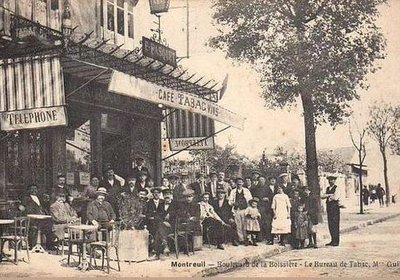
That evening, a bit tired, you wanted to sit down at a new café on the corner of a newly built boulevard, still littered with rubble and proudly showing off its unfinished splendour. The café glittered. The gaslights had the bright glow of a grand opening, glaringly illuminating the blinding white walls, the dazzling surfaces of the mirrors, the gold mouldings and cornices, chubby-cheeked pageboys followed by dogs on leashes, ladies laughing at falcons perched on their wrists, nymphs and goddesses carrying fruit, pâtés, and game on their heads, Hebes and Ganymedes offering with outstretched arms crème bavaroise or multicoloured obelisks of mixed ice cream; all of history and all of mythology pressed into the service of gluttony.
Right in front of us, on the street, stood a man of around forty, with a weary face and a greying beard. He held a little boy by the hand and carried in his other arm a diminutive creature too feeble to walk. He was playing nanny, taking his kids out for some evening air. They were all in rags. The three of them had such serious faces, and their six eyes stared at the shining café with shared wonder, differently nuanced according to their age.
The father’s eyes said: “How beautiful! How beautiful! It’s as if all the gold in our poor world has come to alight on these walls.” The little boy’s eyes said: “How beautiful! How beautiful! But it’s a house where only those can enter who are not like us.” As for the eyes of the littlest one, they were too spellbound to express anything other than inarticulate and profound joy.
Songwriters say pleasure is good for the soul and melts the heart. That evening, the song spoke truly—at least for me. Not only was I touched by that family of gazing eyes, but I felt slightly ashamed of our glasses and carafes, more plentiful than our thirst. I turned my look towards yours, my love, to see my own thoughts reflected; I immersed myself in your eyes, so beautiful and mysteriously soft, in your eyes, flickering with Caprice and inspired by the Moon, when you said to me: “Those people are unbearable with their eyes as big as dinner plates! Can’t you ask the manager to move them on?”
That’s how difficult it is to truly understand one another, my dear angel, that’s how incommunicable thought really is, even between those who love each other!
As we were walking away from the bureau de tabac, my friend carefully sorted through his change; he slipped some small gold coins into the left pocket of his waistcoat; some small silver coins into the right; a pile of large bronze sous into the left pocket of his trousers, and finally, in the right pocket, a silver two-franc coin, which he had examined closely. “That’s a strange and meticulous distribution!” I said to myself.
We came across a beggar who trembled as he held out his cap to us. I can think of nothing so disturbing as the mute eloquence of those pleading eyes, which contain, for the man of sensibility who knows how to read them, both humility and reproach. I have seen something resembling that complex depth of feeling in the tearful eyes of dogs that are being whipped.
My friend’s offering was much more generous than my own, and I said to him: “You’re right; after the unsurpassable pleasure of being surprised, there’s nothing greater than causing a surprise oneself.”
“It was the fake coin,” he replied calmly, as if justifying his generosity.
But in my miserable brain, always trying to prove that two and two makes five (what a tiring ability nature has gifted me!), suddenly the idea struck me that such behaviour on my friend’s part could only be legitimated by the desire to know or to anticipate the diverse consequences, disastrous or otherwise, that a counterfeit coin could bring about when placed in the hands of a beggar.
Couldn’t it multiply into real coins?
Couldn’t it also land him in prison?
An innkeeper or a baker, for example, might have him arrested as a counterfeiter or for passing on fake coins. Equally, the fake coin might become, for some happy speculator, the seed of a few days’ wealth.
And so, my thoughts raced, giving wings to my friend’s thoughts and drawing all kinds of conclusions from all the possible hypotheses.
But he abruptly broke my reverie by repeating my own words, almost as faithfully as the imbecile Pandora in the song by Nadaud: “Yes, you’re right; there’s no pleasure sweeter than surprising a man by giving him more than he expects.”
I looked him in the whites of his eyes, and I was horrified to see that his eyes were shining with unmistakable candour. It was then that I saw clearly that he had wanted both to gain forty sous and the heart of God; to buy a cheap ticket to paradise; better still, spend nothing, that’s to say give something of no value, or, in other words, get the reputation of being a charitable man for nothing.
I would almost have forgiven him his inclination for criminal pleasure that I had thought him capable of a moment ago; I would have found it curious, bizarre, that he found amusement in compromising the poor; but I can never forgive him for the ineptitude of his calculation.
There’s never any excuse for being wicked; but there is some merit in knowing one is wicked.
And the most irreparable of vices is to do evil out of stupidity.
“Illusions,” said a friend of mine, “are perhaps as innumerable as the variety of relations between humans themselves, or even the relations between humans and things. And when illusions are dispelled, that’s to say when we see the person or the thing as it exists independent of ourselves, we experience a strange feeling, complicated in part by regret for the vanished illusion, in part by the pleasurable surprise of confronting novelty, of perceiving a new material reality. If one thing exists that is clear, mundane, unchanging, and of a nature that it is impossible to mistake, it is maternal love; it’s as difficult to imagine a mother lacking maternal love as it is to imagine a light without warmth; isn’t it right to attribute to maternal love all the mother’s words and actions relative to her child? But listen to this little story, where I was completely taken in by this seemingly most natural illusion.
“As a painter by profession, I always pay attention to the faces and physiognomies that I encounter, and you’re well aware of the pleasure we derive from this faculty of observation, which makes our lives richer and more meaningful than those of other men. In the quiet part of town I live in, where wide grassy spaces still separate the buildings, I often noticed a child whose fiery and mischievous look captured my attention at once. He posed for me on more than one occasion, and I dressed him up sometimes as a little bohemian, sometimes as an angel, sometimes as a mythological cupid. I made him pose with the violin of a street performer, a Crown of Thorns and the Nails of the Passion, the Torch of Eros. In the end I was so pleased with the strange ways of this child, that one day I asked his parents, who were hard up, if they’d let me take him on, promising to clothe him, and to pay him a little, and not to demand any more of him than to clean my brushes and to run a few errands for me. The child, given a quick wash, was a delight, and the life he led with me seemed like paradise, compared to the one he’d have led in his parents’ hovel. All I can say against him is that he rapidly developed a sweet tooth and a taste for liqueurs; so much so that one day when I noticed that despite my warnings he’d raided my larder again, I threatened to send him back to his parents. Then I went out, and various things kept me away from the house for some time.
“You can imagine my utter horror, and my astonishment, when on getting back, the first thing I saw was that this little boy, the mischievous companion of my days, had hung himself from the panelling of this wardrobe! His feet didn’t quite reach to the floor; a chair, which he had no doubt kicked away with his feet, was upended next to him; his head bent convulsively onto his shoulder; his face, all bloated; and his eyes, wide open with a frightening fixity, at first made me think he was still alive. Cutting him down wasn’t as easy as you might think. He was already stiff; I felt an instinctive repugnance about letting him suddenly crash down onto the floor. I had to support his whole body with one arm, and, with the hand of my free arm, cut the rope. But that done, I was not yet finished; the little monster had used a very thin cord which had cut deep into his flesh, and now, with a small pair of scissors, I had to locate the cord amidst the two folds of his swollen flesh, to release the neck.
“I forgot to say that I called out loudly for help, but all my neighbours refused to come to my aid, obeisant to the superstitions of the civilised world, which never, I don’t know why, wants to get mixed up in a suicide. Finally a doctor arrived who pronounced that the child had been dead for several hours. When, later on, we stripped the body for burial, the rigidity of the corpse was such that, abandoning our attempts to flex his limbs, we had to tear and cut the clothing to get it off.
“The superintendent to whom I had to report the incident looked at me askance and said, ‘This looks suspicious!’—prompted no doubt by a deep-seated desire and a reflex of the state to instil fear, whenever possible, in the innocent and the guilty alike.
“One final task remained, the very thought of which instilled a terrible fear in me. The parents had to be informed. My feet refused to budge. In the end I found the courage. And yet, to my supreme astonishment, the mother was unmoved; not a single muscle twitched on her face, not a single tear fell from the corner of her eye. I put this strange reaction down to the horror of the situation, and I recalled the saying: ‘The deepest sorrows are suffered in silence.’ As for the father, all he could say, half-dazed, half-dreaming, was: ‘Perhaps it’s all turned out for the best; he was always going to end badly.’
“Meanwhile the corpse was stretched out on my divan, and, helped by a maidservant, I was making the final preparations, when the mother came into my studio. She wanted to see her son’s body, she said. I wasn’t going to stop her expressing her grief by denying her this final sombre consolation. She then asked me to show her the spot where her child had hung himself. ‘No, Madame, I’m sorry,’ I replied, ‘it would be too painful for you.’ And as my eyes involuntarily turned towards the funereal wardrobe, I noticed, with a disgust tinged with horror and anger, that the nail remained fixed in its place, with a long piece of rope still dangling there. I leapt forward to remove these last signs of the tragedy, and as I was about to hurl them out of the open window, the poor woman seized my arm and said to me in a voice I couldn’t ignore: ‘Oh! please Monsieur! leave me that! I beg you! I beg you!’ Her despair was such, I reasoned, that she had been pushed over the edge, and was seized with tenderness for the very instrument of her child’s death, and wished to hang on to it as to some horrible and cherished relic. And so she seized the nail and the rope.
“At last! at last! it was all over. Now I had to get back to work, throw myself into it more than ever, so as to chase from my mind this little corpse which haunted the very folds of my brain, and whose ghost was wearing me down with its wide stare. But the next day I received a bundle of letters, some from the lodgers in my own building, others from neighbouring properties, one, from the first floor, another, from the second, another, from the third, and so on; some written in an almost jocular style, as if trying to hide beneath an apparent bantering tone the seriousness of their request, others bluntly unashamed and badly spelt, but all tending towards the same end, to obtain from me a piece of the deadly rope. Amongst the signatories, I have to say, there were more women than men; but not all of them, believe me, belonged to the vulgar and lowly classes. I have kept the letters.
“And then, suddenly, I saw the light, and I understood why the mother was so eager to snatch the rope from me and with what business she hoped to console herself.
“By Jove! I said to my companion—one metre of hanging-rope, at ten francs the decimetre, all in all, each paying according to their means, that makes a thousand francs, a real, an effective relief for this poor mother.”
You must always be out of your head. That says it all—it’s the only question. In order to escape the horrible burden of Time which breaks your back and bows you down to the earth, you must be out of your head all day.
But on what? Wine, poetry, virtue, whatever. But never be sober.
And if it happens, now and again, on the steps of a palace, on the green grass at the side of a ditch, in the grey loneliness of your digs, that you wake up and find yourself returning slowly to reality, ask the wind, the waves, the star, the bird, the clock, ask everything that flees, everything that cries out, everything that rolls, everything that sings, everything that speaks ask them all what the time is and the wind, the waves, the star, the bird, the clock, will say: “It’s time to get out of your head! Unless you want to be one of the martyred slaves of Time, never be sober, not ever! Use wine, poetry, or virtue, whatever.”
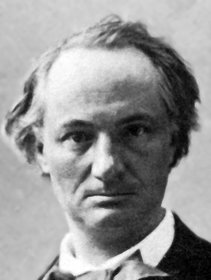
Charles Baudelaire is Charles Baudelaire.
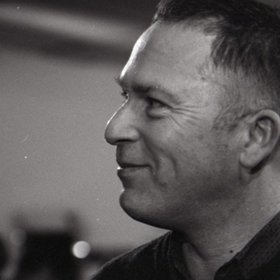
Philip Terry was born in Belfast, and is a poet, translator, and writer of fiction. The Penguin Book of Oulipo, which he edited, was published in Penguin Modern Classics in 2020, and Carcanet published his edition of Jean-Luc Champerret’s The Lascaux Notebooks, the first ever anthology of Ice Age poetry, in 2022.