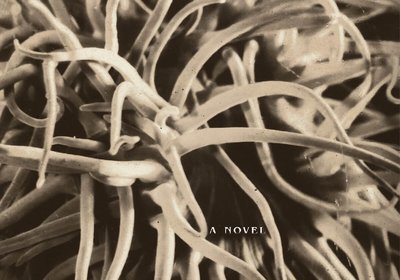
Little Neck
Darcie Dennigan
Fonograf, Sep 2025
“I am saying tomorrow to the starving part of me.”
Little Neck is an enigmatic little book (only 100 pages) that employs the best of Gothic literature and creates a vacillating portrait of a young woman from birth to death and back again (again and again and . . . ).
The narrator wakes up at the home of sisters Rita and Rosmarge, owners of Marguerite Concrete, tombstone carvers in the quaint and haunted New England town of Little Neck. At the point of discovery, she’s bleeding and her blood leaves a trail throughout the rest of the novel, reminding the reader both of life and of its loss. We learn that, as a baby, the narrator was found in Rose Head cemetery. She is raised there by a mysterious groundskeeper until a fateful night where she attempts to dig up bindweed at a grave that simply reads ‘Pearl’. Like Pearl in The Scarlet Letter, this dead woman holds an otherworldly power over the narrator, and represents a liberty unknown to the protagonist. The narrator cuts herself digging up the weeds at Pearl’s grave and is suddenly moved to Rita and Rosmarge’s care—leaving the reader to unravel the mystery around the narrator’s origins and her seemingly inherent connection to death.
Dennigan uses flowers as symbols to mirror different characters based on their fragrance and appearance. The aforementioned bindweed, for example, is seen growing on graves in Rose Head. The narrator remarks that it is very pretty and sweet but strangles everything else. When she tries to cut it out, it is incredibly difficult to kill and only multiplies in division. Flowers also remind readers of the precarity of living things while consistently imbuing the pages with something tactile and sensuous. They are often placed next to dirt, dust or rock, to emphasize their difference obviously but to also illustrate their symbiotic nature, how they feed each other reciprocally through growth and decay.
Little Neck doesn’t choose a lane between sex and death; instead, like all good Gothics, it intertwines them freely. Likewise, familial relationships are very complex and only further complicate the strong death and sexual instincts of the characters. The narrator dreams of the groundskeeper, the only parental figure in her life, and thinks “I have to break his skin with my teeth.” She sees her transfer to Marguerite Concrete as punishment and she lets the resentment fester inside.
“. . . and I grow it myself. I grow it the summer of trouble. Its seed is a rock. This rock is cold and tough. I make myself stand in the high grass in the paupers’ part. Then I push the rock far up in me.”
The rock, this ‘seed’, is seen as a punishment for arousing the ‘keeper’ and, in turn, for being aroused by him. It is the jail of Marguerite Concrete, it is the jail of a child. A tombstone she lives within and lives within her. In some sense, she, as a child and as a woman, is pregnant with herself. It is the responsibility she faces as she lusts for both her keeper and her death. Eros and Thanatos dancing together in an open grave on a Rose’s Head.
This narrative, and indeed the narrator, lives in repetition. At first, it can seem excessive but Dennigan utilizes this Gothic trope only to further underscore Little Neck’s themes of generational trauma. The repetition becomes a meter of grief, and how, by its nature, mourning is an act of reliving. As Dennigan puts it, “[t]he bereaved want to say the same things over and over again until something different is at the end of what they say.”
This haunting novel’s short, simple sentences, told in a building echo, ultimately pack a powerful punch. Pay attention to names, like Viti for example, and how the Latin derivatives of vita (life) or vitis (vine) inform you about those characters. Find roots in the repeated phrases. The word ‘flesh’, for example, is used often to reflect both the animal and the alien, desires and decay. A Brontë novel by way of postmodernism, Little Neck is perfect for those who love haunted things like family myths and tragic love stories.

Jesi Bender is an artist from Upstate New York. She helms KERNPUNKT Press, a home for experimental writing. She is the author of KINDERKRANKENHAUS (Sagging Meniscus 2021) and The Book of the Last Word (Whiskey Tit 2019). Her shorter writing has appeared in The Rumpus, Split Lip, Adroit Journal, and others. www.jesibender.com